← All Posts
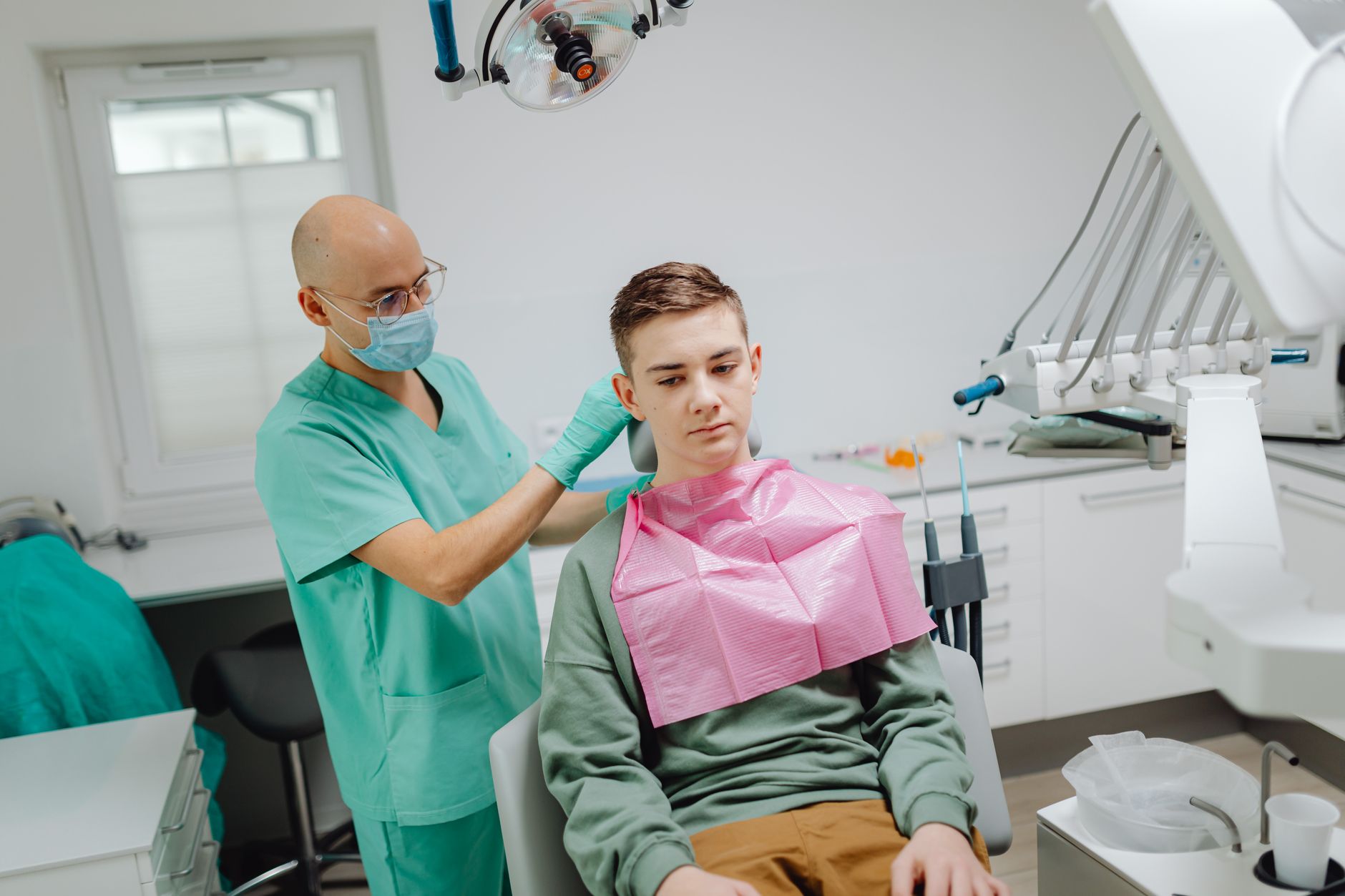
Orthodontist examining young patient's airway and jaw alignment during dental consultation

Airway Orthodontics and Sleep Apnea Treatment: A Complete Guide for Families

By One Smile Orthodontics12 min read

Airway orthodontics treats sleep apnea and disordered breathing. It corrects jaw structure and airway size. Treatment uses expanders, functional appliances, or braces. Children showing symptoms like mouth breathing, snoring, or restless sleep benefit most from early intervention, ideally before age 10. Adults are also strong candidates, often using oral appliances or surgical jaw expansion.

What Is Airway Orthodontics and How Does It Differ from Traditional Orthodontics?

Traditional orthodontics focuses on aligning teeth and correcting bite relationships. Airway orthodontics goes further by evaluating and treating the size and shape of the upper airway, nasal passages, and jaw skeleton. Where conventional braces correct how teeth meet, airway-focused treatment targets conditions like obstructive sleep apnea (OSA), mouth breathing, chronic snoring, and upper airway resistance syndrome. The American Association of Orthodontists recommends a first orthodontic evaluation by age 7, which is also the ideal window to identify airway concerns before skeletal growth locks in unfavorable patterns. A board-certified orthodontist trained in airway evaluation assesses tongue posture, lip seal, jaw width, tonsil size, and nasal patency alongside dental occlusion. Tools used in this specialty include palate expanders, mandibular advancement devices, myofunctional therapy, and functional jaw appliances like the Herbst or Twin Block. The difference is not just in the tools but in the diagnostic framework: airway orthodontics asks why the airway is compromised, not just how the teeth look.

What Structural Problems Does Airway Orthodontics Correct?

Several skeletal patterns directly restrict airway volume and airflow. A narrow palate reduces nasal airflow. It forces mouth breathing. This disrupts normal jaw and facial development over time. A retrognathic, or set-back, lower jaw positions the tongue closer to the throat, partially blocking the airway during sleep. A high-arched palate limits tongue resting posture, contributing to forward head posture and chronically poor sleep quality. Crossbites, overbites, and underbites each contribute to airway compromise in different ways depending on the patient's anatomy. Early orthodontic intervention, specifically growth-guided expansion, is appropriate for many of these cases because the bones are still malleable and respond to lighter forces. Identifying these structural problems at the right developmental stage is the clinical advantage that airway orthodontics provides over waiting until adolescence or adulthood.

How Does Airway Orthodontics Relate to Overall Health?

The health consequences of untreated airway problems extend well beyond poor sleep. In children, sleep-disordered breathing is linked to ADHD-like symptoms, bedwetting, and poor academic performance. Behavioral difficulties often occur. These are frequently misattributed to other causes. In adults, obstructive sleep apnea is associated with elevated risk for hypertension, type 2 diabetes, and cardiovascular disease. Correcting airway structure can reduce or eliminate the need for CPAP therapy in select patients, making orthodontic intervention a long-term investment in systemic health, not just dental aesthetics. A multidisciplinary approach coordinates multiple providers. This includes the orthodontist, ENT specialist, sleep medicine physician, and myofunctional therapist. This produces better outcomes than any single provider working alone. Treatment works best when individualized to the patient's anatomy, age, and specific airway obstruction pattern, and when coordinated across disciplines. This collaborative model is the standard of care for meaningful airway improvement.

Signs Your Child May Need Airway Orthodontic Evaluation

Recognizing the signs early can change a child's developmental trajectory. Consider a 9-year-old boy in West Covina. His parents notice he snores loudly at night. He has dark circles under his eyes. His teacher reports he cannot focus during afternoon lessons. His parents initially worry about ADHD, but an airway orthodontic evaluation reveals a narrow palate restricting nasal airflow. Within months of starting palate expansion, his nighttime breathing improves, his classroom concentration returns, and the dark circles fade, all without medication. Mouth breathing during the day and while sleeping is the most visible early warning sign of airway compromise. Snoring, gasping, or pausing during sleep warrants prompt evaluation by both a pediatric sleep specialist and an orthodontist. Chronic dark circles under the eyes, a long narrow face shape, and crowded teeth all suggest restricted jaw and airway development, a pattern sometimes called adenoid facies. Behavioral symptoms including hyperactivity, difficulty concentrating, and irritability can stem from sleep-disordered breathing rather than true ADHD. Restless sleep, teeth grinding at night, and consistently waking with a dry mouth or headache are additional red flags that parents in West Covina and throughout the San Gabriel Valley should bring to an orthodontist's attention. The clinical prevalence of OSA in children is estimated at 2% to 5%, though higher rates appear in certain clinical populations (ncbi.nlm.nih.gov).

One concrete scenario: a 7-year-old girl in Covina presents with chronic mouth breathing, dark under-eye circles, and a teacher's report of difficulty paying attention in class. Her parents assume it is an attention issue. An airway orthodontic evaluation reveals a narrow palate compressing her nasal floor. A palate expander is placed, nasal breathing improves within months, and her classroom focus follows. This pattern is not unusual. It is the reason early evaluation matters.

Why Does Early Intervention Before Age 10 Matter?

Timing is everything in airway orthodontics. The palate is most malleable before the mid-palatal suture begins obliterating, which typically starts between ages 15 and 18, with complete fusion occurring between ages 25 and 35; because ossification varies considerably among individuals, CBCT-based suture maturation staging — not chronological age alone — is the recommended method for determining the appropriate timing and type of palatal expansion. Palate expansion in early childhood produces faster results with less force and has significantly lower relapse rates than in adolescents or adults. Early correction of jaw deficiencies allows normal facial growth to continue along a healthy trajectory rather than compensating around a restricted airway. Waiting until all permanent teeth erupt can mean missing the window for non-surgical skeletal correction entirely, which converts a straightforward Phase 1 orthodontics case into one requiring surgical intervention. The data on bedwetting reinforces this urgency: a meta-analysis across 11,612 pediatric participants found that 40% of children with OSA also experienced nocturnal enuresis (pmc.ncbi.nlm.nih.gov), and OSA carried an odds ratio of 2.30 for enuresis association (pmc.ncbi.nlm.nih.gov). These are not minor inconveniences. They are signals of systemic oxygen disruption that compound over time if left unaddressed.

Airway Orthodontic Treatment Options for Children, Teens, and Adults

The right treatment depends on the patient's age, skeletal maturity, and the specific airway problem. For younger children, a Rapid Palatal Expander (RPE) is worn for 6 to 12 months to widen the upper jaw and nasal floor, directly increasing nasal airflow. Removable slow expanders work for moderate cases but require strict compliance. Functional appliances like the Herbst, Twin Block, and MARA correct Class II jaw relationships in growing patients by stimulating lower jaw forward growth. For adults whose sutures have fused, Surgically Assisted Rapid Palatal Expansion (SARPE) releases the suture surgically before expansion proceeds. Combined orthodontic-surgical treatment, specifically maxillomandibular advancement, addresses severe skeletal discrepancies causing significant airway obstruction. Mandibular advancement devices (MADs) offer a non-surgical option and have demonstrated meaningful reductions in apnea-hypopnea index scores in published research. That is a compelling clinical result for a removable, non-invasive appliance.

How Does Palate Expansion Improve Sleep Apnea?

Widening the upper jaw lowers the floor of the nasal cavity, increasing nasal airway volume by a structurally measurable amount. Improved nasal breathing reduces negative pressure in the throat during sleep, and it is that negative pressure that drives airway collapse in OSA. Children treated with palate expansion show reductions in apnea-hypopnea index scores across multiple controlled trials. The mechanism is direct: when the nasal passage widens, air moves through with less resistance, the throat muscles do not have to compensate as forcefully, and the airway stays open during sleep. Many children are sitting in classrooms without a diagnosis, and a palate expander placed at the right developmental stage could change their trajectory meaningfully.

What Is the Role of Myofunctional Therapy Alongside Orthodontics?

Myofunctional therapy retrains tongue and lip muscles to support nasal breathing and correct tongue thrust, addressing the muscle behavior that perpetuates airway problems even after structural correction. At One Smile Orthodontics, we coordinate with myofunctional therapists in the West Covina area to ensure patients receive integrated care that addresses both structure and function. When used before or during orthodontic treatment, it significantly reduces relapse rates because teeth and jaws tend to drift back toward the muscle patterns that shaped them. Exercises take 10 to 15 minutes daily and are typically taught by a licensed speech-language pathologist or certified myofunctional therapist. The combination of myofunctional therapy and orthodontic intervention is not additive; it is synergistic. Airway improvement is more stable, and the orthodontic result holds longer because the resting tongue posture supports the new arch form. At One Smile Orthodontics, we coordinate with myofunctional therapists in the West Covina area to ensure patients are not just structurally corrected but functionally trained to maintain those results. This is the difference between a treatment plan and a health plan.

What to Expect During Airway Orthodontic Treatment: Timeline and Costs

An airway-focused evaluation typically includes a clinical exam, dental X-rays (panoramic and lateral cephalometric), and possibly a CBCT (cone beam CT) scan to visualize the airway in three dimensions. A sleep study, either polysomnography or a home sleep test, may be ordered in coordination with a sleep medicine physician to confirm OSA diagnosis and severity. Phase 1 treatment for children typically lasts 6 to 18 months using expanders or functional appliances, with 9 to 12 months being the most commonly cited typical range. Phase 2 comprehensive alignment follows after most permanent teeth erupt, using braces or clear aligners to finalize tooth position. Adult airway orthodontic treatment without surgery typically takes 12 to 24 months; cases requiring jaw surgery (orthognathic surgery or SARPE) generally take 2 to 3 years (24–36+ months) in total, including pre- and post-surgical orthodontic phases. PPO dental insurance often covers Phase 1 and Phase 2 treatment separately, and Medi-Cal covers orthodontic services for children who qualify under medical necessity criteria in California, which includes documented airway-related indications. Many families are surprised to learn that airway conditions can meet medical necessity thresholds, opening coverage pathways that standard cosmetic orthodontic cases do not qualify for. In-house payment plans, CareCredit financing, and flexible start options are available to reduce out-of-pocket burden for West Covina families.

How to Choose an Orthodontist for Airway Treatment

Not every orthodontist offers airway-focused treatment with equivalent depth. Start by confirming board certification through the American Board of Orthodontics (ABO). Ask specifically about the orthodontist's training and case volume in airway-focused treatment, since it is a subspecialty that requires additional study and clinical experience. A personalized treatment plan reviewed directly by the treating orthodontist, not delegated entirely to staff, is a key quality indicator. In our experience, patients achieve the best outcomes when their orthodontist takes direct responsibility for diagnosis, treatment planning, and ongoing case management throughout the entire airway correction process. Look for practices that coordinate with ENT specialists, sleep physicians, and myofunctional therapists rather than treating in isolation. Before-and-after records showing sleep improvement outcomes, transparent fee structures, and patient reviews that reference breathing and sleep results are the most reliable evaluation criteria. The right provider treats the whole patient, not just the dental chart.

Airway Orthodontics vs. CPAP Therapy: Understanding Your Options

CPAP (continuous positive airway pressure) is the gold-standard treatment for moderate to severe adult OSA but does not correct the underlying structural cause of airway collapse. It is a management tool, not a corrective one. Airway orthodontics and oral appliance therapy address the anatomy responsible, making them structural rather than symptomatic solutions. For children, orthodontic and ENT interventions, including adenotonsillectomy, are among the primary treatment approaches. Adults with mild to moderate OSA are strong candidates for mandibular advancement devices as a CPAP alternative, and published adherence data supports their viability as a long-term option (pubmed.ncbi.nlm.nih.gov). Orthognathic surgery, specifically maxillomandibular advancement, achieves the highest success rates for adult OSA resolution. The decision between CPAP and orthodontic or surgical intervention depends on OSA severity, patient anatomy, age, and patient preference, and should always involve a sleep medicine physician in the final recommendation.

Can Orthodontic Treatment Eliminate the Need for CPAP?

For select adult patients with skeletal jaw deficiencies, maxillomandibular advancement surgery combined with orthodontics can resolve OSA without CPAP in a substantial proportion of cases according to published surgical literature. Palate expansion in adults using SARPE has shown meaningful reductions in AHI and improved sleep quality in published case series. These are not guaranteed outcomes for every patient. Patients should never discontinue CPAP without a follow-up sleep study confirming treatment success. Orthodontic treatment alone, without addressing tongue posture, body weight, or nasal patency, may produce incomplete OSA resolution. The most honest clinical answer is that airway orthodontics can reduce or eliminate CPAP dependence for the right patient, but candidacy requires a full diagnostic workup, not a checklist.

Airway Orthodontics vs. CPAP vs. Oral Appliance Therapy: At a Glance

The table below compares the three primary treatment pathways for sleep apnea across the most important decision factors. Use it as a starting framework, not a definitive guide; your orthodontist and sleep physician should review your specific anatomy and diagnosis before any treatment decision.

For families in West Covina and across the San Gabriel Valley, this comparison is a practical starting point when navigating a conversation between your child's pediatrician, a sleep specialist, and an orthodontist. The categories are not mutually exclusive; some patients use CPAP during orthodontic treatment and transition off it once structural correction is confirmed by a follow-up sleep study.

Published on: July 21, 2026 | Last Updated: July 21, 2026

Frequently Asked Questions

At what age should my child be evaluated for airway orthodontics?+
The American Association of Orthodontists recommends a first evaluation by age 7. For airway concerns specifically, earlier is better. If your child mouth breathes, snores, or shows behavioral signs of poor sleep before age 7, request an evaluation immediately. The palate is most responsive to expansion before age 10, so early assessment preserves the best treatment options.
How do I know if my child's snoring is serious enough to see an orthodontist?+
Any snoring in a child that occurs more than a few nights per week warrants evaluation. Snoring accompanied by gasping, pausing in breathing, restless sleep, mouth breathing, or daytime behavioral problems is particularly urgent. These patterns suggest sleep-disordered breathing that a board-certified orthodontist and a pediatric sleep specialist should assess together to determine the appropriate intervention.
Does insurance cover airway orthodontic treatment for children?+
PPO dental insurance commonly covers Phase 1 and Phase 2 orthodontic treatment separately. In California, Medi-Cal covers orthodontic services for children who qualify under medical necessity criteria, which can include documented airway-related conditions. Families should ask their orthodontist to submit a pre-authorization with clinical documentation supporting the medical necessity of airway treatment to maximize coverage.
Can adults benefit from airway orthodontics, or is it only for children?+
Adults benefit significantly from airway orthodontics, though the tools differ from pediatric treatment. Adults with fused sutures may require Surgically Assisted Rapid Palatal Expansion (SARPE) or maxillomandibular advancement surgery. Mandibular advancement devices are effective non-surgical options for mild to moderate OSA. Invisalign with arch expansion protocols can also address moderate airway concerns in adults without surgery.
What is the difference between a palate expander and a mandibular advancement device?+
A palate expander widens the upper jaw and nasal floor permanently, increasing nasal airway volume through skeletal change. It is primarily used in growing children and some adults via surgical assistance. A mandibular advancement device is a removable appliance worn only during sleep that repositions the lower jaw forward to prevent airway collapse. One corrects structure; the other manages position nightly.
How long does airway orthodontic treatment take from start to finish?+
Phase 1 early intervention for children typically runs 12 to 18 months. Phase 2 comprehensive alignment adds additional time after permanent teeth erupt. Adults receiving airway orthodontic treatment generally require 18 to 36 months depending on severity and whether surgery is involved. A full evaluation with CBCT imaging and a sleep study is needed to build an accurate timeline for any individual case.
Is airway orthodontics scientifically proven, or is it considered experimental?+
Airway orthodontics is supported by peer-reviewed research published in sleep medicine and orthodontic journals. Palate expansion, mandibular advancement devices, and maxillomandibular advancement surgery each have substantial clinical evidence supporting their effectiveness for reducing apnea-hypopnea index scores and improving sleep quality. The field is evolving rapidly, and outcome data continues to strengthen the evidence base for both pediatric and adult applications.
What happens if I do not treat my child's sleep-disordered breathing?+
Untreated sleep-disordered breathing in children is associated with impaired cognitive development, ADHD-like behavioral symptoms, poor academic performance, and bedwetting. Long-term oxygen disruption during sleep affects cardiovascular health and immune function. Skeletal airway problems also worsen as facial growth progresses without correction, making eventual treatment more complex and expensive. Early intervention prevents compounding consequences across multiple body systems.
Can Invisalign be used for airway orthodontic treatment?+
Invisalign can support airway orthodontic goals in teens and adults through arch expansion protocols. Published research shows average expansion predictability of 75.5% in the upper jaw and 80.6% in the lower jaw using clear aligners. For mild to moderate airway concerns, Invisalign combined with targeted expansion planning is a viable option. Severe skeletal deficiencies typically require functional appliances or surgical intervention beyond what clear aligners alone can achieve.
How do I find a qualified airway orthodontist near me in the West Covina or San Gabriel Valley area?+
Look for a board-certified orthodontist (ABO-certified) with documented training in airway evaluation and a multidisciplinary referral network including ENT and sleep medicine. Ask about case volume in airway-focused treatment and whether the treating orthodontist personally reviews every treatment plan. One Smile Orthodontics in West Covina offers airway-focused orthodontic care with personalized plans crafted by Dr. Namgu Kim for children and adults throughout the San Gabriel Valley.
What are the signs of sleep apnea in children?+
Key signs include snoring, gasping or pausing during sleep, mouth breathing, restless sleep, chronic dark circles under the eyes, bedwetting, morning headaches, and daytime behavioral problems like hyperactivity or difficulty concentrating. A long narrow face and crowded teeth can also indicate restricted jaw and airway development. If your child shows multiple signs, prompt evaluation by a pediatric sleep specialist and an orthodontist is strongly recommended.
Can a palate expander improve breathing and sleep?+
Yes. Widening the upper jaw lowers the floor of the nasal cavity and increases nasal airway volume, reducing airway resistance during breathing. Children treated with palate expansion show measurable reductions in apnea-hypopnea index scores in multiple clinical trials. Improved nasal airflow reduces the negative throat pressure that causes airway collapse during sleep, directly improving sleep quality and reducing OSA severity in appropriately selected patients.
How does airway orthodontics differ from traditional braces?+
Traditional braces align teeth and correct bite relationships within the existing jaw structure. Airway orthodontics evaluates and reshapes the jaw skeleton and nasal airway to address the root structural causes of breathing problems and sleep apnea. Airway orthodontics uses expanders, functional appliances, and sometimes surgical coordination alongside braces or aligners. The diagnostic process is broader, incorporating tongue posture, nasal patency, and sleep quality alongside standard dental occlusion assessment.
When should a child be evaluated for airway issues?+
Evaluation should happen no later than age 7 per AAO guidelines, but any age is appropriate if airway symptoms are present. Mouth breathing, snoring, restless sleep, bedwetting, or behavioral concerns at any age warrant evaluation rather than a wait-and-see approach. Earlier evaluation preserves more treatment options, particularly non-surgical skeletal expansion, which becomes less effective after the palatal suture begins fusing around ages 12 to 14.
What are CPAP alternatives for kids with sleep apnea?+
CPAP is rarely used in children. First-line alternatives include adenotonsillectomy (removal of enlarged tonsils and adenoids) performed by an ENT, palate expansion to widen the nasal airway, functional jaw appliances to advance the lower jaw, and myofunctional therapy to retrain breathing muscle patterns. These interventions address the anatomical causes of airway obstruction rather than applying pressure to keep the airway open, making them developmentally appropriate for growing children.

Sources & References

  1. Obstructive sleep apnea and nocturnal enuresis in the pediatric population: a systematic review and meta-analysis - PMC[gov]
  2. Evaluating the effectiveness of mandibular advancement devices in treating very severe obstructive sleep apnea: a retrospective cohort study - PubMed[gov]
  3. Predicting transversal dental arch expansion outcomes with Invisalign aligners in permanent dentition: a systematic review and meta-analysis - PubMed[gov]
  4. Pediatric Obstructive Sleep Apnea - StatPearls - NCBI Bookshelf[gov]
  5. Pediatric Obstructive Sleep Apnea - StatPearls - NCBI Bookshelf[factcheck]
  6. Obstructive sleep apnea and nocturnal enuresis in the pediatric population: a systematic review and meta-analysis (Sleep and Breathing, 2026)[factcheck]
  7. The Right Time: When Should Your Child See an Orthodontist? | American Association of Orthodontists[factcheck]
  8. EPSDT Services - Medi-Cal Dental (DHCS, CA.gov)[factcheck]
  9. Surgically Assisted Rapid Palatal Expansion to Correct Maxillary Transverse Deficiency - PMC (NIH)[factcheck]
  10. Phase 1 Orthodontics | Children's Hospital of Philadelphia[factcheck]
  11. Duration of orthognathic-surgical treatment – PubMed (NCBI)[factcheck]

About the Author

One Smile Orthodontics

One Smile Orthodontics is a West Covina practice led by Dr. Namgu Kim, offering board-certified expertise in braces, Invisalign, and airway orthodontics for all ages.

Learn more at www.onesmileorthodontics.com

Related Posts