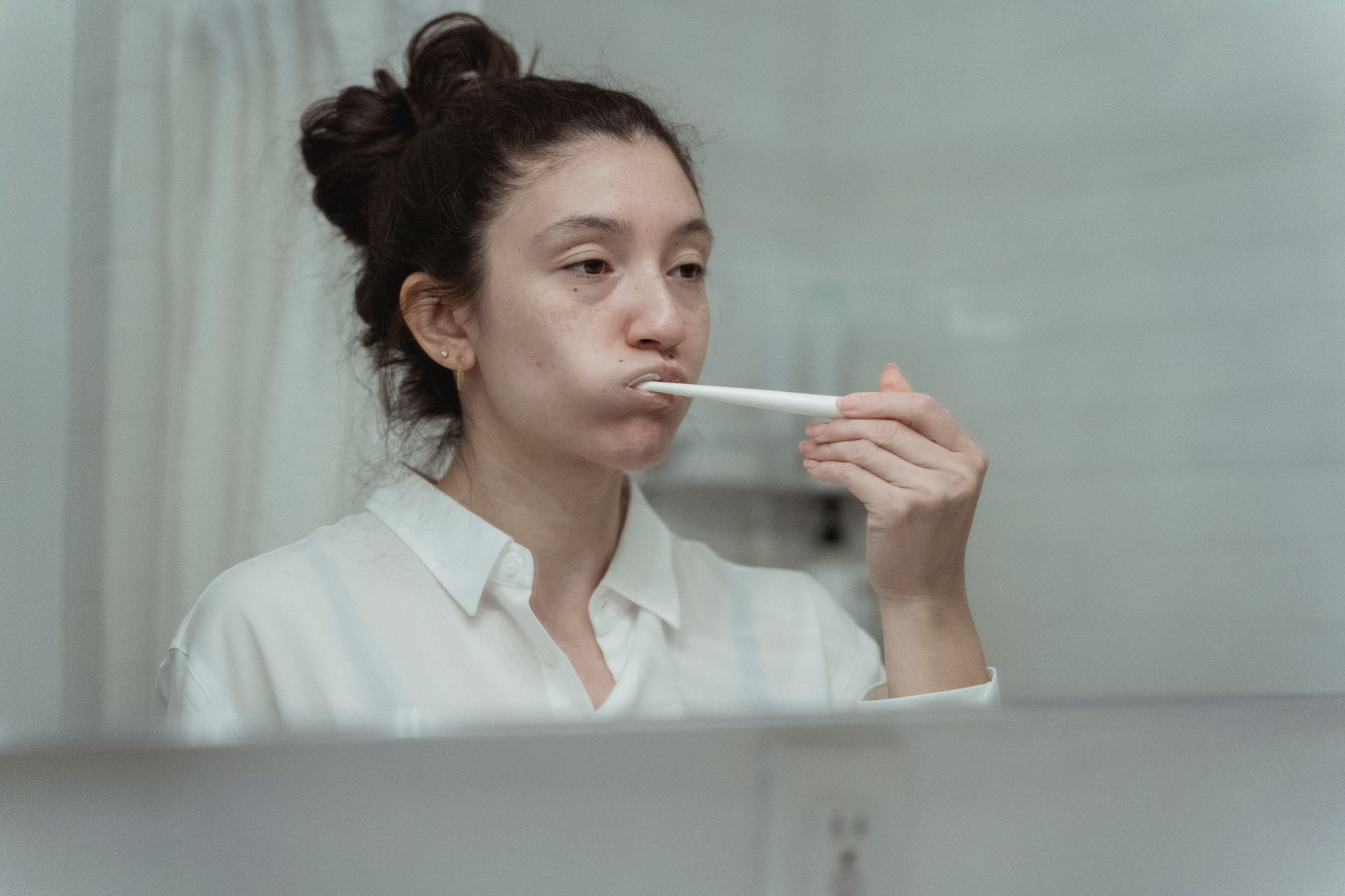
To keep teeth clean with braces, brush at a 45-degree angle above and below each wire after every meal using a soft-bristle toothbrush, then floss daily using a floss threader or water flosser. The AAO recommends brushing for two minutes after every meal or snack and before bed, with additional time needed for flossing, and this routine prevents cavities, white spots, and gum disease during orthodontic treatment in West Covina and beyond.
Why Is Oral Hygiene Harder With Braces?
Braces transform your mouth into a complex obstacle course for your toothbrush. Every bracket, wire, and tie creates new surfaces where plaque accumulates, and a standard brushing technique that served you well before treatment now cleans a fraction of what it needs to. Food particles trapped around brackets ferment rapidly, producing acids that attack enamel within days. The geometry of fixed orthodontic appliances means debris hides above the wire, below it, between the bracket and the gumline, and in the contact points between teeth. None of these zones are accessible with a single brushing angle. Patients who understand this early are far more motivated to adjust their technique, and that motivation directly determines how healthy their teeth look when brackets finally come off.
In plain terms, small increases in plaque measurably raise your risk of gum disease. The same study found that calculus buildup carried an odds ratio of 2.04 for developing gingivitis during orthodontic treatment. These are not abstractions. They are the quantified cost of skipping your nightly brush.
What Happens If You Skip Proper Cleaning During Braces?
The consequences of poor hygiene during orthodontic treatment are permanent. White spot lesions are the most visible outcome: chalky, opaque marks left on enamel after brackets are removed, caused by acid demineralization beneath a layer of undisturbed plaque. Unlike surface stains, these lesions cannot be polished away. They require remineralization therapy, resin infiltration, or cosmetic procedures to address. Beyond white spots, cavities can form directly beneath brackets, sometimes requiring fillings before treatment even ends. Swollen, bleeding gums can slow treatment progress because orthodontists including Dr. Namgu Kim at One Smile Orthodontics in West Covina, CA may pause certain adjustment steps when gum tissue is inflamed. In the most neglected cases, untreated plaque leads to bone loss around tooth roots from periodontitis, a consequence that outlasts braces by years. That rate is preventable.
Step-by-Step Brushing Technique for Braces
Proper brushing with braces requires three distinct angles across each tooth, not one sweeping motion. Start with a soft-bristle toothbrush and a pea-sized amount of fluoride toothpaste. Guidelines recommend over-the-counter toothpastes rated at 1000 ppm to 1500 ppm fluoride for cavity prevention during active treatment (dentalrx.ca). Position the brush at a 45-degree angle at the gumline and make small circular motions across each tooth for roughly 2 seconds. Then tilt the brush downward from above the wire to clean the upper face of each bracket, and tilt upward from below the wire to clean the lower face. Finish with the chewing and tongue-side surfaces using standard technique. Total time: 2 minutes minimum. After meals when a full brush is not possible, rinsing vigorously with water for 30 seconds significantly reduces the acid load on your enamel.
Brush gently. This is critical and often overlooked. Excessive pressure does not remove more plaque from brackets; it only irritates the gumline and can cause gum recession over time. The goal is dwell time and angle, not force. Think of the bristles as wiping rather than scrubbing. If your gums look red or feel sore after brushing, reduce pressure immediately. Gum tissue around brackets is already under mechanical stress from treatment; aggressive brushing adds inflammation that compounds the problem.
After brushing, use a dental mirror or your phone's front camera with the flashlight on to inspect each bracket. No white film or food debris should remain around any bracket edge or under the wire. This visual check takes 30 seconds and catches the gaps that feel clean but are not. A mirror confirms what your toothbrush assumes.
Which Toothbrush Works Best With Braces?
Brush selection matters more with braces than at any other time. A 2025 network meta-analysis of 19 randomized controlled trials found that oscillating-rotating electric toothbrushes ranked first in plaque reduction with a surface under the cumulative ranking curve (SUCRA) of 89.2%, while sonic brushes ranked second at 72.4% (pmc.ncbi.nlm.nih.gov). Manual toothbrushes ranked last at 18.3% SUCRA (pmc.ncbi.nlm.nih.gov). For braces patients, this gap is magnified because brackets create more plaque-retention sites than a flat tooth surface. Orthodontic electric toothbrush heads pair well with the Oral-B iO and Philips Sonicare platforms. If a manual brush is your only option, choose a V-shaped orthodontic brush with a notched bristle pattern designed to straddle the wire.
Replace your brush head or manual toothbrush every 3 months, or sooner if bristles flare. This happens faster with braces because wires create lateral stress on bristles during every stroke. A frayed brush does not clean effectively regardless of how long you brush. Keep a spare in your orthodontic kit.
Interdental brushes, also called proxy brushes, in sizes 0.6mm to 0.9mm are non-negotiable additions. They fit between the bracket and the wire on each tooth, clearing debris that neither a regular brush nor floss can reach. GUM Proxabrush and TePe are widely available and durable enough to reuse a few times before replacement.
How Often Should You Brush With Braces?
Brush after every meal and snack, ideally within 30 minutes of eating. The minimum acceptable schedule is morning, after lunch, and before bed. This three-times-daily pattern matters because fermentable food debris left on brackets for more than an hour begins producing acid that attacks enamel. Carry a travel toothbrush and travel-size 1000 ppm to 1500 ppm fluoride toothpaste in your bag or school backpack (dentalrx.ca). When brushing is not possible, rinse with water immediately after eating. That single step reduces the acid spike meaningfully.
The morning, post-lunch, and nighttime pattern is worth structuring deliberately. Brush in the morning after breakfast, not before, so food debris from the meal does not sit on brackets all morning. After lunch at school or work, a 90-second brush with a travel kit handles the midday accumulation. The nighttime brush is the most important: plaque that sits undisturbed overnight causes the most damage because saliva flow decreases during sleep, removing the natural buffering mechanism your mouth uses to neutralize acid. For example, consider a 14-year-old in West Covina who got braces last month and rushes through her nighttime routine. She brushes for 30 seconds instead of 2 minutes and skips flossing most nights. Within 6 weeks, her gums become swollen and bleed when she brushes, and Dr. Kim at One Smile Orthodontics notes early calculus buildup at her next appointment. A focused conversation about why nighttime hygiene matters, plus habit stacking her flossing to her phone charging routine, transforms her compliance, and her gum health rebounds within 3 weeks.
Step-by-Step Flossing Technique for Braces
Flossing with braces is more involved than regular flossing, but it protects contact points that no brush can reach. The process with a threader: cut 18 inches of waxed floss, thread the stiff end under the archwire using a plastic floss threader, then guide the floss between two teeth. Curve it into a C-shape around each tooth and slide gently beneath the gumline before pulling out and re-threading for the next contact point. Waxed floss resists shredding on bracket edges; unwaxed floss frays and can catch. A standard adult mouth has approximately 26–27 interproximal contact points across the upper and lower arches; completing all of them with a floss threader typically takes 10 to 20 minutes for beginners and around 10 minutes with practice. That time investment is the primary reason most orthodontic patients skip flossing entirely. The tools in the next section exist to solve exactly that problem.
Sources: (dentistdecoded.com)
How Does a Water Flosser Work With Braces?
A water flosser uses a pressurized pulsating stream of water to flush plaque and debris from between teeth and under the gumline. For braces patients, the tip traces along the gumline and circles each bracket, dislodging trapped food that threading floss cannot always reach. Set the device to medium pressure (around setting 5 to 7 on most models) to avoid gum irritation.
A water flosser does not fully replace string floss. A patient who water-flossers every night achieves dramatically better outcomes than a patient who owns string floss and uses it twice a month. Consistency beats perfection. Use both if you can manage it. Prioritize the water flosser if one must be chosen.
What Are the Easiest Flossing Tools for Kids and Teens?
Pre-threaded orthodontic flossers eliminate the threading step entirely, making compliance far more realistic for younger patients. Platypus Orthodontic Flossers are flat enough to slide under the archwire without a separate threader, allowing kids to floss with a familiar tool. For children under 10 to 12, a parent should assist with nightly flossing until fine motor skills make independent flossing accurate. Building flossing into an existing routine, tied to homework time or after-dinner screen time, increases follow-through significantly. Habit anchoring is more effective than reminders alone. The routine does not need to be perfect from day one; it needs to become automatic.
Additional Tools and Rinses That Protect Teeth With Braces
The right adjunct products make a measurable difference in outcomes during orthodontic treatment. Fluoride mouthwash used nightly after brushing reaches enamel surfaces that the toothbrush cannot fully access and actively remineralizes early demineralization before it becomes a visible white spot. Look for products containing sodium fluoride, used as a final rinse before bed without eating or drinking afterward. Disclosing tablets or disclosing mouthwash stain residual plaque pink or blue, giving patients a map of exactly where their brushing misses. Using disclosing tablets once a week is one of the most effective training tools available, particularly for teens who brush quickly without inspecting their results. Orthodontic wax prevents soft tissue irritation from sharp bracket edges, reducing the discomfort that discourages thorough brushing in the first days after adjustment appointments.
Avoid whitening toothpastes during active treatment. This trade-off is important and specific to braces: whitening agents whiten the exposed enamel around brackets but cannot penetrate the adhesive bond beneath them. The result is an uneven tone after brackets are removed, with darker squares where brackets were bonded. Standard fluoride toothpaste protects enamel more effectively and avoids this cosmetic outcome. Fluoride protection is the priority.
Are There Foods That Make Cleaning Braces Harder?
Food choice directly affects how difficult each brushing session becomes. Sticky foods like caramel, gummy candy, and dried fruit wrap around brackets and resist removal even with thorough brushing. Hard foods including popcorn kernels, nuts, and hard pretzels can lodge under wires and dislodge brackets, creating new plaque traps that require emergency appointments to resolve. Sugary drinks and sports drinks are particularly damaging because they coat the entire bracket structure in fermentable sugar that produces acid contact across every surface simultaneously.
Cut hard fruits and vegetables into small pieces rather than biting directly. Apples and carrots are nutritious but biting into them puts lateral stress on the archwire. Orthodontic-friendly snacks include soft cheese, yogurt, bananas, and cooked vegetables. These are pH-neutral or slightly alkaline, minimize debris, and do not challenge the wire mechanically. The food choices you make between appointments are as influential on your final result as the appliances themselves.
Building a Consistent Braces Hygiene Routine That Actually Sticks
Knowing the right technique is only half the challenge. The other half is doing it reliably for 18 to 24 months. Behavioral research on habit formation consistently shows that habit stacking, attaching a new behavior to an existing automatic action, is more durable than relying on reminders or willpower. Attach morning brushing to the end of breakfast. Attach nighttime flossing to the beginning of the bedtime routine, not the end when fatigue reduces follow-through. The habit becomes invisible when it is part of an existing sequence rather than a standalone task.
Set up a dedicated orthodontic hygiene kit: a travel toothbrush, floss threader, proxy brushes, and orthodontic wax in a compact case kept in a school bag or purse. Removing the friction of finding supplies eliminates the most common excuse. A two-minute timer or a brushing app ensures full duration brushing, especially for children and teens who rush. Schedule professional dental cleanings at least every six months during orthodontic treatment; your dentist may recommend more frequent visits (every 3 to 4 months) if you have elevated plaque buildup, gum inflammation, or other individual risk factors (aaoinfo.org). Braces accumulate calculus faster than unobstructed teeth, and research has found calculus presence carried an odds ratio of 2.04 for gingivitis onset. Your general dentist and orthodontist form a team during this period. Neither can cover what the other addresses.
A compliance note worth taking seriously: research has found that brushing at least twice daily had a protective odds ratio of 0.43 against gingivitis in orthodontic patients. Twice daily brushing cut the odds of developing gum disease by more than half. That is a measurable, achievable behavioral intervention with no cost beyond time.
How One Smile Orthodontics Supports Patients With Hygiene During Treatment
At One Smile Orthodontics in West Covina, CA, our approach to hygiene is built into every appointment, not treated as an afterthought. Dr. Namgu Kim personally reviews each patient's oral hygiene at every visit rather than delegating this assessment to assistants alone. At the start of treatment, every patient receives a chairside hygiene orientation where Dr. Kim demonstrates brushing and flossing technique with the patient's specific bracket type, not a generic demonstration on a model. Patients also receive a starter orthodontic hygiene kit including a proxy brush, floss threaders, and orthodontic wax.
For families in the San Gabriel Valley, language is not a barrier. The West Covina practice serves a multilingual community and provides hygiene instruction in the patient's preferred language when possible. If a patient's hygiene is declining at a check-up, Dr. Kim may extend the interval between certain adjustment steps until oral health improves. This is not a penalty. It protects the long-term result. A beautiful smile at the end of orthodontic treatment requires healthy enamel and gums, and those conditions are maintained appointment by appointment throughout the process. Our team has found that patients who receive specific, personalized hygiene coaching in the first month of treatment maintain far better compliance throughout the full treatment period compared to those who receive only a printed instruction sheet.
Frequently Asked Questions
How long should I brush my teeth with braces each time?
Can I use an electric toothbrush with braces?
How do I floss with braces without a floss threader?
What happens if I don't floss with braces?
How often should I see my dentist while I have braces?
Is a water flosser enough, or do I still need to use string floss with braces?
What foods should I avoid to make cleaning braces easier?
Why do I see white marks on my teeth after braces come off?
What toothbrush is best for cleaning braces?
How often should I floss with braces?
Are water flossers effective with braces?
How do I clean around brackets and wires?
Sources & References
- Dental Fluoride Guidelines 2026: Addressing Controversy — DentalRx (opens in a new tab)[industry]
- Dentist Decoded: Waterpik vs. Traditional Flossing — The Evidence-Based Verdict 2026 (opens in a new tab)[industry]
- PMC: Comparative Efficacy of Electric Toothbrush Technologies in Plaque and Gingivitis Reduction: A Network Meta-Analysis (opens in a new tab)[peer-reviewed]
- Frontiers in Medicine: Risk Factors and Development of a Prediction Model for Gingivitis in Patients Undergoing Orthodontic Treatment (opens in a new tab)[peer-reviewed]
- Living With Braces: The Brace-Faced Adventure | American Association of Orthodontists (opens in a new tab)[factcheck]
- Fluoride: Topical and Systemic Supplements | American Dental Association (opens in a new tab)[factcheck]
- Efficacy of products for bleaching and whitening under orthodontic brackets (PMC9639618) (opens in a new tab)[factcheck]
- A Review of White Spot Lesions: Development and Treatment with Resin Infiltration (PMC/NCBI) (opens in a new tab)[factcheck]
- The Relationship between Sleep, Chronotype, and Dental Caries—A Narrative Review (PMC / NIH) (opens in a new tab)[factcheck]
About the Author
One Smile Orthodontics
One Smile Orthodontics is a West Covina practice led by Dr. Namgu Kim, offering board-certified expertise in braces, Invisalign, and airway orthodontics for all ages.
Learn more at www.onesmileorthodontics.com → (opens in a new tab)Related Posts

7 Foods You Cannot Eat With Braces (And What to Eat Instead)
Braces are a significant investment in your smile, and what you eat can make or break your progress. This guide covers the 7 most damaging foods to avoid during orthodontic treatment, explains exactly why they cause problems, and offers delicious safe alternatives so you never feel deprived.
14 min read
Lingual Braces vs. Invisalign: Which Is Better for Adults Who Want Hidden Treatment?
Both lingual braces and Invisalign offer nearly invisible orthodontic treatment for adults, but they work very differently and suit different cases. This comparison breaks down cost, comfort, effectiveness, and lifestyle fit so you can choose the right hidden treatment for your smile goals.
9 min read
5 Questions to Ask Before Starting Phase 2 Orthodontic Treatment
Phase 2 orthodontic treatment is a significant commitment for your family. Knowing the right questions to ask your orthodontist beforehand can mean the difference between a cookie-cutter result and a truly beautiful, lasting smile. Here are the five questions every parent should ask before saying yes.
9 min read