Every Type of Braces Compared in 2026: Metal, Ceramic, Damon, Lingual, and Clear Aligners
In 2026, several braces types are available. These include traditional metal braces. Ceramic braces exist too. Damon self-ligating braces are an option. Lingual braces and clear aligners like Invisalign round out the choices. Budget-friendly wins. Ceramic braces blend with teeth. Lingual braces hide behind teeth entirely. Clear aligners offer the most discreet option for mild-to-moderate cases (realdentalcosts.com).
How Traditional Metal Braces Work and Who They Are Best For
Traditional metal braces use stainless steel brackets bonded directly to each tooth with a dental adhesive. A continuous archwire threads through each bracket, and small elastic ties (ligatures) hold the wire in place. Adjustment appointments happen every 4 to 8 weeks. The orthodontist applies controlled forces. Wire thickness or curvature changes gradually move teeth. Movement follows a precise, pre-planned path. This mechanical system gives an experienced orthodontist complete, three-dimensional control over every tooth individually. At One Smile Orthodontics, we leverage this precision. We address the most complex cases. Detailed three-dimensional control over individual tooth movement is essential. Both function and aesthetics matter. That level of precision is why metal braces remain the go-to for complex crowding, deep bites, crossbites, and skeletal discrepancies that simpler appliances cannot fully address. Precision matters most.
Modern brackets are smaller and smoother. Earlier designs caused more soft-tissue irritation. Colored elastics also make metal braces popular with children and teens who want to personalize their treatment.
Advantages and Limitations of Metal Braces
The clinical case for metal braces is straightforward. They offer the broadest range of tooth movement, work for all age groups, carry the lowest price point, and guarantee compliance because they cannot be removed. Insurance coverage is most predictable with metal braces, since virtually all PPO plans that include orthodontic benefits recognize them as a covered appliance. For families navigating a tight budget in West Covina, starting with metal braces rarely produces surprises at the billing desk.
The trade-offs are real, though. Metal braces are the most visible option on this list. They require dietary modifications: hard foods, sticky candies, and anything that could dislodge a bracket are off-limits. Cleaning requires more effort, specifically interdental brushes and floss threaders around each bracket. Some patients experience minor soreness for two to three days after each adjustment as teeth begin to move. The best candidates are children, teens, and adults. They have moderate-to-severe crowding. They have significant bite problems. They need precise control over individual tooth movement. Patients benefit most from metal braces predictability and versatility. Personalized treatment planning is combined with this approach. Plans are tailored to each individual's skeletal and dental characteristics.
Ceramic Braces and Whether the Extra Cost Is Worth It
Ceramic braces function mechanically in exactly the same way as metal braces. The difference is material: brackets are made from tooth-colored alumina ceramic or composite material that blends with natural enamel. The result is a fixed appliance that is far less noticeable in conversation, photos, and professional settings. Confidence counts. Image-conscious teens and adults who need fixed appliance treatment but want less visual impact are the primary audience.
The staining question comes up in nearly every patient consultation. The ceramic bracket itself doesn't stain easily. The elastic ligature ties stain most easily. Those ties hold the wire to the bracket. Those ties are made from polyurethane, which readily absorbs pigment from coffee, tea, red wine, and turmeric. The brackets themselves, made from modern alumina, resist staining quite well over the course of treatment (toothbytooth.com). Patients who finish 24 months of treatment with ceramic braces typically find that the brackets look roughly the same color on removal day as they did at placement (toothbytooth.com). The brackets are slightly more brittle than metal, which means hard foods carry a marginally higher bracket-fracture risk.
How Ceramic Braces Compare to Clear Aligners for Adults
Adults in the San Gabriel Valley frequently face a direct choice between ceramic braces and clear aligners. This decision hinges on case complexity. Does the case require fixed-appliance precision? Ceramic braces provide that. Or does lifestyle convenience matter more? Aligners offer that benefit. Compliance habits and professional environment matter too. Ceramic braces are fixed, which means treatment progresses regardless of patient behavior. Clear aligners (Invisalign, ClearCorrect, Spark Aligners) require 22 hours of daily wear, with removal only for eating, drinking, or brushing teeth. This keeps treatment on schedule. Missed wear time directly extends treatment. Complex bite corrections need ceramic braces. Ceramic braces deliver more predictable outcomes. Orthodontists apply forces that aligner trays cannot replicate. Adults who travel frequently prefer aligners. Adults in client-facing roles prefer them too. Sports players like the removable convenience. They accept the trade-offs involved. A clinical exam, X-rays, and digital scans with a board-certified orthodontist are the only reliable way to determine which option suits a specific case.
What Makes Damon Braces Different From Conventional Braces
Damon braces are a self-ligating bracket system. The fundamental mechanical difference is the elimination of elastic ligature ties. Instead of a separate elastic holding the archwire against the bracket slot, each Damon bracket has a built-in sliding door, a passive clip that closes over the wire and holds it with minimal pressure. This passive mechanism reduces friction between the wire and bracket at the point of contact. Less friction, in principle, means the archwire can express its shape more freely and guide teeth along a lower-force, wider arch path without requiring as much force at each wire change.
The clinical reality is more nuanced. This is where independent research matters. Peer-reviewed meta-analyses were published in major journals. Self-ligating systems were compared to conventional brackets. No statistically significant reduction in treatment duration was found. Both systems require similar time. Some studies support fewer adjustment appointments. The passive clip doesn't need elastic replacement. Conventional braces require elastic replacement at every visit. Comfort improvements appear in the first 24 to 72 hours. Some trials documented this benefit. Low-friction passive wires apply gentler forces. Initial leveling becomes easier. We evaluate tooth positions specifically. Jaw structure gets assessed. Bite mechanics are analyzed. Then we recommend a bracket system. No bracket alone determines outcome quality.
Are the Clinical Claims About Damon Braces Supported by Evidence
The marketing around Damon braces frequently emphasizes fewer visits, less discomfort, and potential to avoid tooth extractions. The extraction claim is the most contested. Early Damon literature made claims about arch expansion. Low-force wires were said to work. Crowded teeth could be accommodated. Premolar removal might not be needed. Independent systematic reviews found no consistent advantage for Damon braces over conventional mechanics regarding the ability to avoid premolar extractions. Conventional mechanics used by skilled clinicians work well too. Extraction decisions need skeletal analysis. Facial profile goals matter. Airway considerations are important. Bracket brand shouldn't drive this decision. Evidence guides care. Reduced appointment frequency is the claim with the strongest support in the literature, though the magnitude varies by study. Consider Damon braces in West Covina. Ask if the orthodontist is Damon-trained. Learn their extraction philosophy. Ask specifically about cases like yours.
Lingual Braces and Clear Aligners for Patients Who Want Invisible Treatment
Lingual braces sit on the tongue-facing side. They are completely undetectable from the front. Incognito (3M/Solventum) was discontinued in 2025 and is no longer available; current lingual braces systems include Harmony (American Orthodontics) and WIN braces, both using custom CAD/CAM-fabricated brackets from digital impressions or intraoral scans. A temporary lisp is common with lingual braces as the tongue adapts to the bracket profile; most patients see improvement within 2–4 weeks, but speech distortion — particularly of the /s/ sound — can persist for up to several months in some cases. Lingual braces are also harder to clean than labial braces because patients cannot see the brackets directly, which makes meticulous hygiene practice even more critical to avoid decalcification or gum issues during treatment.
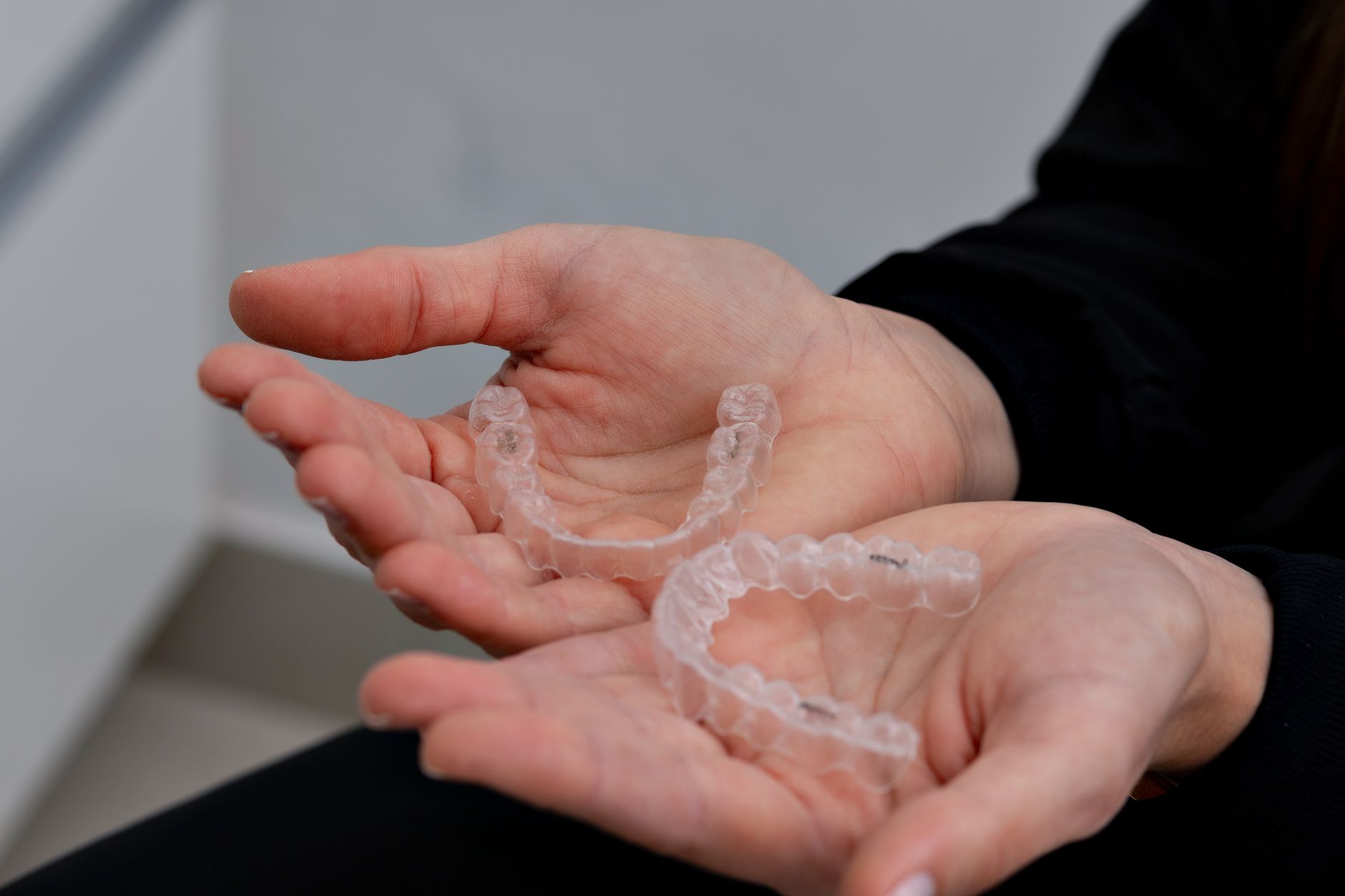
Clear aligners like Invisalign, ClearCorrect, and Spark Aligners use a series of removable thermoplastic trays, each worn for one to two weeks, to move teeth incrementally. They are nearly invisible in daily life and remove completely for eating, brushing, and flossing. Aligners are FDA-cleared and most effective for mild-to-moderate crowding, spacing, and certain bite corrections. Complex skeletal issues or cases requiring significant molar intrusion still tend to produce more predictable outcomes with fixed appliances.
Who Is the Best Candidate for Clear Aligners Like Invisalign
Ideal aligner candidates are teens and adults with mild to moderate crowding, excess spacing, or minor relapse after previous orthodontic treatment. Aligner systems are also available for younger patients, and options vary by provider and case type. High compliance is the single biggest predictor of success: missing daily wear hours directly extends treatment time, and unlike braces, no one can enforce the habit but the patient. Discipline drives results. Newer Invisalign trays include blue compliance indicators that fade with wear, giving patients and parents a visible check. Severe skeletal discrepancies typically require orthognathic surgery regardless of appliance type; for severe open bites and multiple-extraction cases, fixed braces have historically been preferred, but current evidence shows clear aligners with TADs or proper biomechanical planning can achieve comparable outcomes — patients should consult an orthodontist to determine the best approach for their specific case. We recommend a thorough clinical assessment to determine whether your case falls into this category, because the appliance choice directly influences the predictability and refinement of your final result. The early orthodontic evaluation recommended by the American Association of Orthodontists at age 7 gives clinicians the chance to identify bite problems and crowding early, when intervention is simpler and less costly.
Side-by-Side Comparison of Every Braces Type in 2026
Choosing between appliances requires weighing case complexity, aesthetic priorities, lifestyle, compliance history, and budget. No single type is universally best. The comparison table below summarizes the key dimensions.
A board-certified orthodontist, indicated by American Board of Orthodontics (ABO) certification, is the most qualified professional to match an appliance to a specific case after clinical examination, X-rays, and digital scans. For example, consider a 14-year-old in West Covina with crowded teeth and mouth-breathing habits. A board-certified orthodontist would use digital scans and X-rays to assess not only tooth position but also jaw development and airway space, then recommend metal braces paired with early intervention strategies to address both the bite problem and the breathing pattern before skeletal growth completes. This personalized, multi-dimensional approach takes into account the specific goals of the family, their insurance coverage through a local PPO plan, and the child's long-term health outcomes. At One Smile Orthodontics, our board-certified team performs this detailed analysis for every patient to ensure that the recommended appliance system delivers both the clinical outcomes and the lifestyle fit that matter most to you. Total cost should be weighed against quality of outcome, not just sticker price. Personalized treatment from a specialist typically delivers more aesthetically refined results than high-volume offices where patients rarely see the same doctor twice.
Questions to Ask at Your First Orthodontic Consultation
Walking into a consultation prepared changes the conversation. Ask whether the treating doctor is board-certified by the American Board of Orthodontics and will personally oversee every stage of your treatment. Ask which appliance type is recommended for your specific case and what the clinical reasoning is. Request a complete fee breakdown that includes retainers, X-rays, and follow-up care, along with a list of accepted insurance plans. If you are bringing a child, ask whether early intervention is appropriate now or whether observation is the right call. Families in the San Gabriel Valley with children who mouth-breathe, snore, or show signs of disturbed sleep should specifically ask whether the practice evaluates airway and breathing concerns as part of orthodontic assessment. Airway orthodontics is a growing and clinically meaningful area, and catching a developing problem at age 7 or 8 is far simpler to address than waiting until growth is complete.
Frequently Asked Questions
What is the cheapest type of braces available in 2026?
How long does orthodontic treatment take with each type of braces?
Are Damon braces really faster than traditional metal braces?
Can adults get braces or Invisalign, or is orthodontic treatment just for kids?
Do ceramic braces stain, and how do I prevent it?
Does insurance cover all types of braces, or only metal ones?
What is the difference between Invisalign and other clear aligner brands like ClearCorrect or Spark?
At what age should my child have their first orthodontic evaluation?
Can braces or orthodontic treatment help with breathing problems and sleep apnea in children?
How do metal, ceramic, and Damon braces compare in 2026?
Which braces type is cheapest in 2026?
How much do braces cost in Singapore in 2026?
Are ceramic braces worth the extra cost?
What are the pros and cons of self-ligating braces?
Sources & References
- Braces Cost 2026: Metal, Ceramic, Lingual & Aligners (opens in a new tab)[industry]
- Dental Insurance 2026: PPO vs HMO, Maximums & Coverage (opens in a new tab)[industry]
- Adult Braces Cost: How Much Adults Pay for Braces in 2026 (opens in a new tab)[industry]
- Do Ceramic Braces Stain? What Actually Stains and How to Prevent It (opens in a new tab)[industry]
- medical-insurance-orthodontic-treatment-west-covina-20260512 (opens in a new tab)[industry]
- ceramic-braces-vs-metal-braces-cost-aesthetics-2026 (opens in a new tab)[industry]
- damon-braces-vs-traditional-braces-treatment-time-cost (opens in a new tab)[industry]
- invisalign-vs-braces-for-teens-2026 (opens in a new tab)[industry]
- Effectiveness and accuracy of clear aligners in treatment of deep bite: a systematic review – PubMed (May 2025) (opens in a new tab)[factcheck]
- Systematic review on self-ligating vs conventional brackets: initial pain, number of visits, treatment time – NCBI/DARE (indexed via PubMed) (opens in a new tab)[factcheck]
- Self-Ligating Brackets in Orthodontics: A Systematic Review – PMC (PubMed Central) (opens in a new tab)[factcheck]
- Effects of fixed labial orthodontic appliances on speech sound production – PMC (NIH) (opens in a new tab)[factcheck]
- FDA 510(k) Clearance Letter – Pearl Clear Aligner (K242715), January 16, 2025 (opens in a new tab)[factcheck]
- The Right Time: When Should Your Child See an Orthodontist? | American Association of Orthodontists (opens in a new tab)[factcheck]
- The Use of Clear Aligners for Orthognathic Surgery: A Systematic Review - PubMed / ScienceDirect (Int J Oral Maxillofac Surg, 2024–2025) (opens in a new tab)[factcheck]
- Color fading of the blue compliance indicator encapsulated in removable clear Invisalign Teen® aligners - PMC (opens in a new tab)[factcheck]
About the Author
One Smile Orthodontics
One Smile Orthodontics is a West Covina practice led by Dr. Namgu Kim, offering board-certified expertise in braces, Invisalign, and airway orthodontics for all ages.
Learn more at www.onesmileorthodontics.com → (opens in a new tab)Related Posts

7 Foods You Cannot Eat With Braces (And What to Eat Instead)
Braces are a significant investment in your smile, and what you eat can make or break your progress. This guide covers the 7 most damaging foods to avoid during orthodontic treatment, explains exactly why they cause problems, and offers delicious safe alternatives so you never feel deprived.
14 min read
Lingual Braces vs. Invisalign: Which Is Better for Adults Who Want Hidden Treatment?
Both lingual braces and Invisalign offer nearly invisible orthodontic treatment for adults, but they work very differently and suit different cases. This comparison breaks down cost, comfort, effectiveness, and lifestyle fit so you can choose the right hidden treatment for your smile goals.
9 min read
How to Keep Teeth Clean With Braces: A Step-by-Step Brushing and Flossing Guide
Keeping teeth clean with braces requires more effort than regular brushing, but the right technique makes it manageable. This step-by-step guide covers brushing angles, flossing methods, and the tools that protect your smile while you straighten it.
13 min read