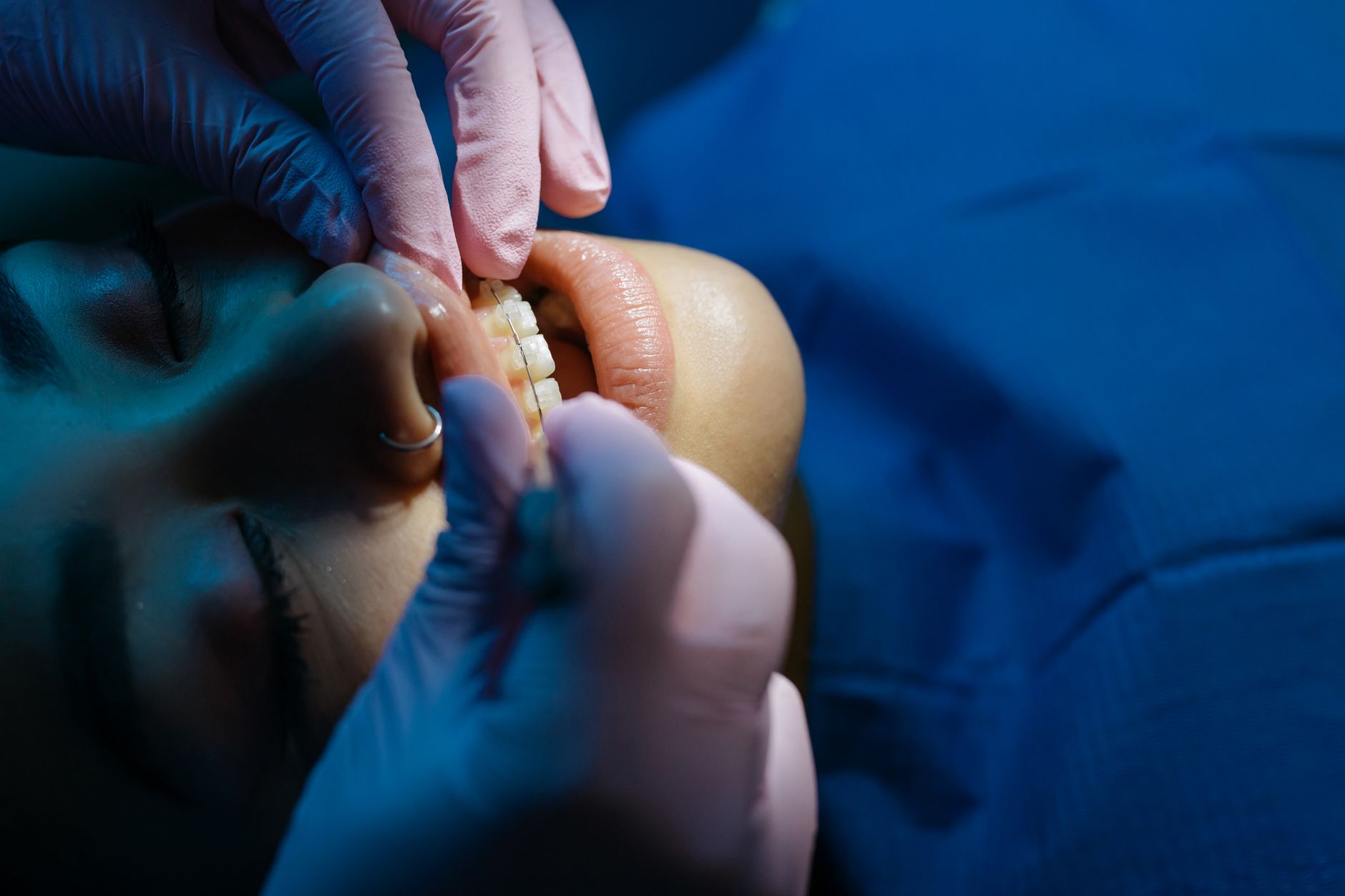
A retainer holds your teeth in their corrected positions after braces are removed. Without it, teeth gradually shift back toward their original alignment, a process called orthodontic relapse. Retainers stabilize the bone and soft tissue still settling around newly moved teeth, protecting the results of your braces treatment long-term.
How Does a Retainer Actually Work?
Braces move teeth through controlled, sustained pressure applied over months or years. The bone surrounding each tooth actually dissolves on one side and rebuilds on the other to allow that movement. Once braces come off, the work is not finished. The periodontal ligament, a flexible connective tissue anchoring each tooth to its socket, has been stretched into a new orientation and will attempt to spring back unless held in place. Retainers apply light, consistent force that blocks this rebound. The surrounding bone is also initially soft after orthodontic treatment and takes time to fully remodel and harden around the new tooth positions. Skipping a retainer during this window is the most common reason patients in West Covina and elsewhere see their results unravel.
The biology here is more specific than most practices explain. When an orthodontist moves a tooth, osteoclasts break down alveolar bone ahead of the movement while osteoblasts deposit new bone behind it. At the moment braces are removed, that newly deposited bone is immature, with collagen fibers that have not yet fully mineralized. The periodontal ligament fibers are also reorienting along new tension lines, a process that continues for months. A retainer does not merely "hold" the tooth in a cosmetic sense. It maintains the mechanical environment that allows this tissue maturation to complete without disruption. Research shows that 40% to 90% of orthodontic patients develop dental irregularities within 10 to 20 years after treatment completion, and consistent retainer wear is the primary method recommended to reduce this risk (pmc.ncbi.nlm.nih.gov). That wide range reflects variability in how long patients actually wore their retainers after treatment ended.
Fixed vs. Removable Retainers: What Is the Difference?
The two main categories of orthodontic retainers each solve the retention problem differently, and the best choice depends on which teeth were moved, how severe the original crowding was, and how reliably a patient will comply with wearing instructions.
Fixed retainers, sometimes called bonded or permanent retainers, are thin metal wires bonded directly to the backs of teeth with dental adhesive. They work 24 hours a day, 7 days a week, requiring zero patient compliance beyond proper cleaning. This makes them the preferred option for lower front teeth, which have the strongest relapse tendency due to the inward pressure of the tongue and natural jaw growth patterns.
Removable retainers come in two forms. Essix retainers are clear plastic trays that fit over all tooth surfaces, nearly invisible when worn, and are the most commonly prescribed option today. Hawley retainers use an acrylic base and a visible wire that crosses the front teeth. Many orthodontists prescribe a combination approach: a fixed retainer bonded behind the lower front teeth paired with a clear Essix tray worn nightly on the upper arch. This hybrid strategy covers both the highest-relapse zone with a compliance-independent device and the upper arch with a near-invisible solution.
Why Does Wearing a Retainer After Braces Matter?
The stakes are real. Orthodontic relapse is not just a cosmetic inconvenience. Teeth shifting out of alignment affects how upper and lower teeth meet during chewing, which can create uneven bite forces, accelerate enamel wear, and strain the temporomandibular joint over time. Broader orthodontic literature indicates that only 30 to 50% of orthodontic patients retain satisfactory alignment 10 years after treatment, suggesting that the majority of patients experience measurable relapse over time (pmc.ncbi.nlm.nih.gov). That number is not a warning about edge cases. It describes the majority of patients.
The lower front teeth are the highest-risk area. Natural forces never stop acting on them: the tongue presses inward from behind, the lips press inward from the front, and for younger patients still in their late teens, the jaw continues to grow. These forces work gradually but relentlessly. Early relapse, caught within weeks, can sometimes be reversed simply by resuming retainer wear if the tray still fits. Advanced shifting typically requires new orthodontic treatment, which costs considerably more than replacing a retainer. That is a small price compared to a second round of braces treatment. At One Smile Orthodontics, our team has seen patients come in after a two-year retainer gap needing significant re-treatment that a consistent nightly wear habit would have entirely avoided. For example, consider a 16-year-old in West Covina who completed braces treatment and stopped wearing their removable retainer after just six months because they felt their teeth were stable. Within two years, their lower front teeth had shifted noticeably inward due to tongue pressure and ongoing jaw growth, requiring nine months of additional Invisalign treatment that could have been completely prevented.
What Happens If You Stop Wearing Your Retainer?
Teeth begin shifting within days to weeks of stopping retainer use. This is not an exaggeration. The periodontal ligament never stops exerting tension, and the forces from lips, tongue, and adjacent teeth never pause. In the first 6 to 12 months after braces, the bone is still remodeling and the risk is highest. A patient who finishes braces treatment in West Covina and stops wearing their retainer after six months has taken on significant relapse risk, even if they cannot see the movement yet. Visible crowding often lags behind the actual tooth movement by several more months. By the time it is noticeable, re-treatment may already be necessary. Aging adds another layer: natural forward drift of teeth, called mesial drift, continues throughout life regardless of whether a person ever had braces.
How Long Do You Need to Wear a Retainer After Braces?
The standard clinical protocol begins with full-time wear during the initial months after braces are removed, covering the peak vulnerability window when bone is still mineralizing and the periodontal ligament is still reorienting. Removing the retainer only to eat, drink, and brush is the expectation during this period, not the exception.
After the initial stabilization phase, most orthodontists transition patients to nightly wear indefinitely. "Indefinitely" is not a figure of speech. The American Association of Orthodontists and most evidence-based retention protocols recognize that natural tooth drift never stops, which means protection must continue for life. For teens in the San Gabriel Valley area whose jaws are still growing through the late teens, even nightly wear must be monitored carefully at follow-up visits to confirm the retainer still fits properly as facial growth continues. Adults have generally completed jaw growth, but the lifelong nightly recommendation applies equally. Consistency is everything. Wearing a retainer five nights a week instead of seven creates cumulative drift over years that adds up.
Dr. Namgu Kim at One Smile Orthodontics in West Covina provides every patient with a personalized retainer plan as part of each treatment conclusion. That plan includes a specific wear schedule, instructions for cleaning and storage, and scheduled follow-up checks to catch any early fit issues before they become alignment problems. Every case is different. A patient who had severe crowding before braces may need a more vigilant retention protocol than someone who had mild spacing. Personalized guidance, not a one-size approach, is what protects your results.
Frequently Asked Questions
Do I really have to wear a retainer forever after braces?
What is the difference between a clear retainer and a wire retainer?
Can a retainer fix teeth that have already shifted after braces?
How do I clean and care for my retainer?
What should I do if I lose my retainer after braces?
How long should I wear a retainer after braces?
What types of retainers are available?
What happens if I stop wearing my retainer?
Can I wear a retainer again after years without it?
Sources & References
- Evaluation of retention protocols among members of the American Association of Orthodontists in the United States - PMC (opens in a new tab)[edu]
- AI-driven predictive modelling of orthodontic relapse using retainer compliance and patient factors - PMC (opens in a new tab)[edu]
- Interventions for managing relapse of the lower front teeth after orthodontic treatment - PMC (NIH/NLM) (opens in a new tab)[factcheck]
- Are Retainers Necessary After Orthodontic Treatment? | American Association of Orthodontists (opens in a new tab)[factcheck]
- Relapse and inadvertent tooth movement post orthodontic treatment in individuals with fixed retainers: A review – PMC (NIH) (opens in a new tab)[factcheck]
- Ameliorating orthodontic relapse using laser bio-stimulation and mesenchymal stem cells in rats – PMC (NIH) (opens in a new tab)[factcheck]
About the Author
One Smile Orthodontics
One Smile Orthodontics is a West Covina practice led by Dr. Namgu Kim, offering board-certified expertise in braces, Invisalign, and airway orthodontics for all ages.
Learn more at www.onesmileorthodontics.com → (opens in a new tab)Related Posts

7 Foods You Cannot Eat With Braces (And What to Eat Instead)
Braces are a significant investment in your smile, and what you eat can make or break your progress. This guide covers the 7 most damaging foods to avoid during orthodontic treatment, explains exactly why they cause problems, and offers delicious safe alternatives so you never feel deprived.
14 min read
Lingual Braces vs. Invisalign: Which Is Better for Adults Who Want Hidden Treatment?
Both lingual braces and Invisalign offer nearly invisible orthodontic treatment for adults, but they work very differently and suit different cases. This comparison breaks down cost, comfort, effectiveness, and lifestyle fit so you can choose the right hidden treatment for your smile goals.
9 min read
How to Keep Teeth Clean With Braces: A Step-by-Step Brushing and Flossing Guide
Keeping teeth clean with braces requires more effort than regular brushing, but the right technique makes it manageable. This step-by-step guide covers brushing angles, flossing methods, and the tools that protect your smile while you straighten it.
13 min read