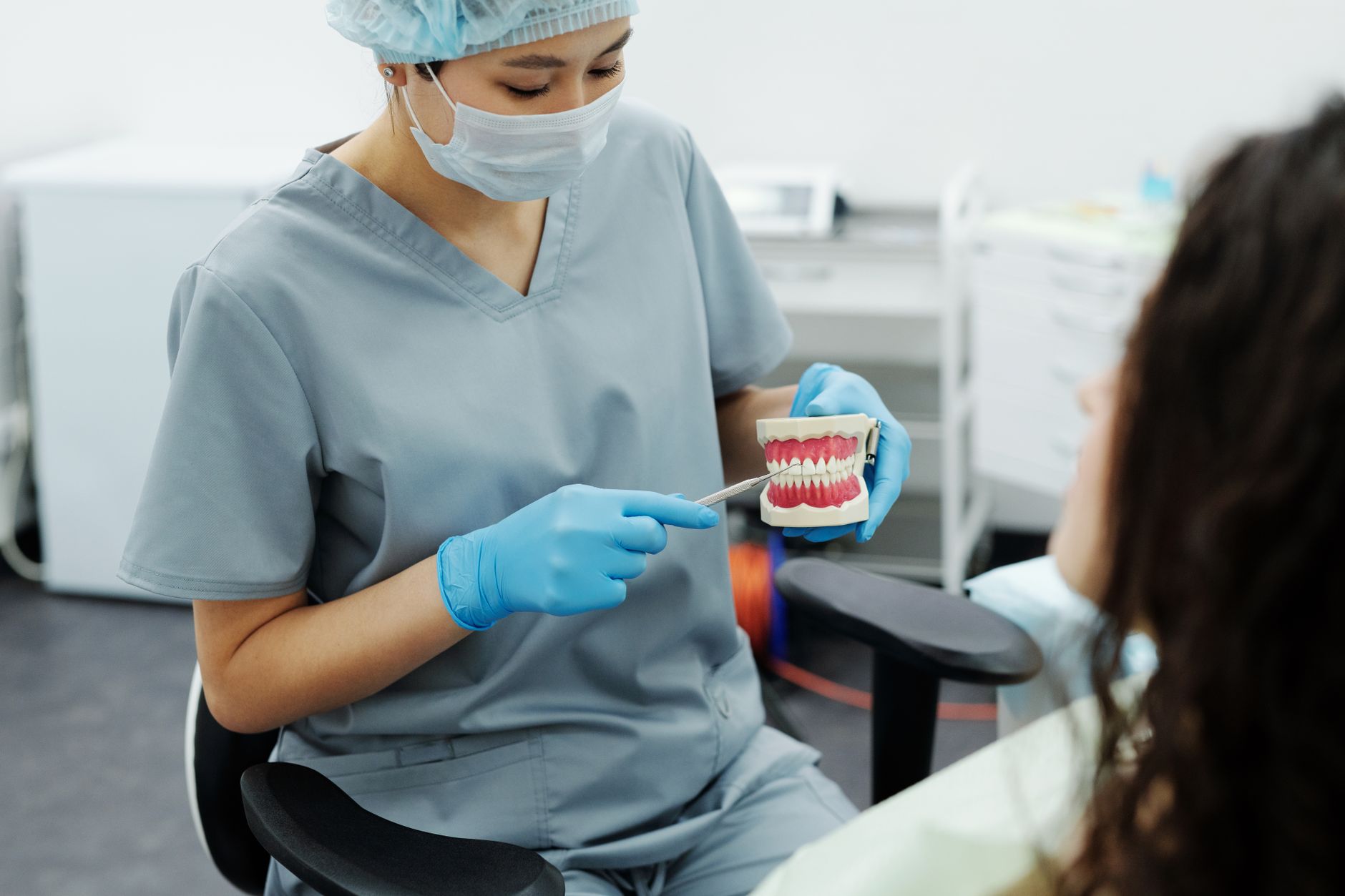
Before starting Phase 2 orthodontic treatment, ask your orthodontist: Is my child's jaw development ready? Which appliance fits their case best? How long will treatment take? What does insurance cover? And who personally oversees each visit? These five questions protect your investment and help ensure a healthy, lasting result.
Phase 2 orthodontic treatment is the comprehensive stage of two-phase orthodontic treatment, typically beginning after most permanent teeth have erupted. It corrects bite problems, dental crowding, midline discrepancies, and jaw alignment issues that could not be fully resolved during Phase 1. For families in West Covina and the San Gabriel Valley, knowing what to ask before committing saves both money and months of avoidable frustration.
1. Is My Child's Skeletal Development Actually Ready for Phase 2?
Skeletal readiness is the single most important factor in Phase 2 timing, yet it is the question parents ask least often. Phase 2 treatment generally begins between ages 11 and 14, once most or all permanent teeth have erupted, though the exact timing varies by the child's individual development. A child who is chronologically 12 may be skeletally younger or older depending on their individual growth trajectory. Starting Phase 2 too early means treating teeth that are still moving, which can require re-treating the same issues. Starting too late forfeits natural growth windows that make certain corrections far simpler.
At One Smile Orthodontics, Dr. Namgu Kim personally reviews every diagnostic record before any Phase 2 plan is finalized. This is not a formality. It is the foundation of treatment that actually works.
What Diagnostic Records Confirm Phase 2 Readiness?
Three records together paint a complete picture of readiness. No single image is sufficient on its own, and a board-certified orthodontist interprets all three before recommending treatment.
A panoramic X-ray shows the eruption status of every permanent tooth and flags any impacted teeth, particularly the upper canines, which are among the most commonly impacted teeth in adolescents. Dental models or 3D intraoral scans capture the bite relationship in three dimensions, revealing arch width, overjet, and overbite in ways a photograph cannot. Together, these records answer whether Phase 2 should start now, in six months, or not yet at all.
2. Which Treatment Option Is Right for This Specific Case: Braces or Invisalign?
This is the question most practices answer with a sales pitch rather than clinical reasoning. The honest answer depends on your child's specific diagnosis, not on which appliance the office promotes most aggressively. Phase 2 corrects a wide range of problems: Class II and Class III bite relationships, significant crowding, open bites, deep bites, crossbites, and midline asymmetries. Some of these respond equally well to braces or clear aligners. Others require the precise three-dimensional control that fixed appliances provide.
But moderate crowding with a significant bite component often requires braces to achieve the torque control and vertical control that clear aligners cannot reliably deliver without extensive attachments and frequent refinements.
How Does an Orthodontist Choose Between Braces and Invisalign for Phase 2?
The choice between braces and Invisalign Teen for Phase 2 comes down to three clinical variables. First, bite class and severity: for mild-to-moderate Class II cases requiring elastics, current evidence suggests clear aligners provide comparable sagittal correction to braces and may offer better control of lower incisor proclination; for severe Class II or significant skeletal discrepancies, a multidisciplinary approach may still be warranted regardless of appliance type. Second, compliance: clear aligner treatment requires consistent daily wear, and an adolescent who struggles with this will extend treatment significantly and may not achieve the planned result. Third, aesthetic goals: smile arc preservation, gingival display, and midline alignment are finishing details that a skilled orthodontist prioritizes regardless of appliance. A board-certified orthodontist, not a general dentist, is best positioned to make this call.
3. How Long Will Phase 2 Treatment Take and What Does the Timeline Look Like?
Phase 2 orthodontic treatment in adolescents typically ranges from 12 to 30 months depending on case complexity, growth remaining, and patient cooperation. The number parents hear at the consultation is an estimate, not a contract. What protects you is asking for milestone checkpoints: What should we see at six months? At twelve? What signals that treatment is on track versus falling behind?
Several factors extend treatment beyond the original estimate. Elastic wear compliance is the single biggest variable in most teen cases. Impacted canines, when discovered after Phase 2 begins, can add six months or more to the timeline. Missed appointments compound quickly: every skipped adjustment visit shifts the finish date further out. High-frequency vibration devices marketed as treatment accelerators have mixed clinical evidence, and Dr. Kim's honest assessment is that consistent elastic wear and kept appointments outperform any device.
What Factors Can Shorten or Lengthen Phase 2 Treatment Time?
Consider a specific scenario: a 12-year-old in West Covina with moderate crowding and a Class II bite who begins Phase 2 with braces. If she wears her elastics every night and attends every six-week appointment, she finishes in 20 months. If she skips elastics three nights out of seven and misses two appointments over the course of treatment, her finish date moves to 26 or 28 months. The biology is the same. The compliance is the variable. Digital monitoring tools and in-office progress scans can catch drift early, giving the treating orthodontist a chance to intervene before a minor issue becomes a significant delay. Ask your orthodontist whether their practice uses these tools proactively or only reactively.
4. What Will Phase 2 Cost, and What Does My Insurance Actually Cover?
Cost and insurance coverage are completely absent from most orthodontic practice Q&A content, which leaves parents to discover the financial picture only after sitting down with a treatment coordinator. Clear aligner cases on the complex end of the spectrum can exceed typical ranges due to refinement trays and extended treatment time.
Pre-authorizing benefits with your insurer before treatment begins protects you from surprise denials after the fact. One Smile Orthodontics accepts most PPO insurance plans and offers in-house orthodontic payment plans to close the gap between what insurance covers and the total investment.
How Do Orthodontic Insurance Maximums Work Across Phase 1 and Phase 2?
The structure of orthodontic insurance benefits confuses many families, and the confusion costs real money. Ask the orthodontic office for a written benefits verification that shows the original maximum, the amount already paid, and the remaining balance before you sign any treatment contract. Depending on your plan's terms and conditions, prior authorization for Phase 2 as a separate course of treatment may also be required. Getting that authorization in writing before treatment starts is non-negotiable. Ask whether the practice will bill your insurance directly or require you to seek reimbursement yourself.
5. Who Will Actually Be Treating My Child at Every Single Appointment?
This question makes some practices uncomfortable. That discomfort is informative. In large dental service organization chains and high-volume corporate orthodontic practices, rotating associate doctors or extended-duty dental assistants routinely handle adjustment appointments without the lead orthodontist present. Patients may meet the primary doctor once at the consultation and then rarely again until debond. This is a volume-driven model, and it produces volume-driven results.
Continuity of care matters in orthodontics because Phase 2 involves hundreds of incremental biomechanical decisions. The person adjusting a wire or activating a spring should know the case intimately: what the bite looked like six months ago, how the canine has been tracking, where the finishing goals are. Board certification by the American Board of Orthodontics signals that the treating orthodontist has met a rigorous standard of clinical excellence beyond dental school graduation. At One Smile Orthodontics, Dr. Namgu Kim is personally present at every patient appointment and personally handles every adjustment. This is not marketing language. It is the practice model.
Why Does Doctor Continuity Matter More in Phase 2 Than in Phase 1?
Phase 1 treatment often involves removable appliances and broader skeletal corrections where small week-to-week variations are less consequential. Phase 2 is different. The biomechanical adjustments in comprehensive braces or aligner treatment are finer, more interdependent, and highly sensitive to cumulative clinical judgment. Smile arc, torque, root parallelism, and final detailing are decisions that one doctor who has followed the case from the beginning makes better than a rotating team. Parents asking for a West Covina orthodontist should ask directly during the consultation: Will the same doctor see my child at every single visit? The answer tells you everything about the practice's priorities.
Retention: The Stage Phase 2 Families Overlook
Retention is the continuation of Phase 2, not the end of it. After braces or aligners come off, teeth have a biological drive to return toward their pre-treatment positions. Retention protocols prevent this, but they require compliance and monitoring. Most orthodontists prescribe a combination of fixed lower retainers bonded behind the front teeth and removable upper retainers worn nightly. The retainer stage typically involves check-ups at 6 months, 12 months, and annually thereafter, though protocols vary by practice and by case. Parents should ask during the initial consultation whether retainers are included in the Phase 2 fee or billed separately, and what the replacement cost is if a removable retainer is lost or broken. A clear retention protocol discussed in advance is a sign of an orthodontist who is thinking about long-term outcomes, not just the debond appointment.
| Factor | Favors Braces | Favors Invisalign Teen |
|---|---|---|
| Case complexity | Severe crowding or bite correction | Mild to moderate crowding |
| Compliance history | Concerns about consistent wear | Demonstrated responsibility |
| Bite class | Class II or III requiring elastics | Class I with spacing or mild crowding |
| Aesthetic priority | Fastest correction timeline | Discretion during treatment |
| Impacted teeth | Present and requiring traction | Absent |
| Cost consideration | Often lower starting fee | May increase with refinements |
Frequently Asked Questions
What is the difference between Phase 1 and Phase 2 orthodontic treatment?
Do kids always need Phase 2 treatment after Phase 1?
How much does Phase 2 orthodontic treatment cost with insurance in California?
At what age does Phase 2 orthodontic treatment typically begin?
Can Phase 2 orthodontic treatment be done with Invisalign instead of braces?
What happens during phase 2 orthodontic treatment?
How long does phase 2 treatment usually take?
What questions should I ask about braces or aligners?
Sources & References
- Phase 2 Orthodontics | Children's Hospital of Philadelphia (opens in a new tab)[factcheck]
- The Prevalence and Categories of Impacted Maxillary Canines: A Radiographic Study (PMC/NIH) (opens in a new tab)[factcheck]
- Orthodontic Management of Class II Malocclusion with Clear Aligners: Mandibular Advancement vs. Class II Elastics – PMC (opens in a new tab)[factcheck]
- Clear aligner biomechanical limitations: anchorage and couple (torque) development - PMC (opens in a new tab)[factcheck]
About the Author
One Smile Orthodontics
One Smile Orthodontics is a West Covina practice led by Dr. Namgu Kim, offering board-certified expertise in braces, Invisalign, and airway orthodontics for all ages.
Learn more at www.onesmileorthodontics.com → (opens in a new tab)Related Posts

7 Foods You Cannot Eat With Braces (And What to Eat Instead)
Braces are a significant investment in your smile, and what you eat can make or break your progress. This guide covers the 7 most damaging foods to avoid during orthodontic treatment, explains exactly why they cause problems, and offers delicious safe alternatives so you never feel deprived.
14 min read
Lingual Braces vs. Invisalign: Which Is Better for Adults Who Want Hidden Treatment?
Both lingual braces and Invisalign offer nearly invisible orthodontic treatment for adults, but they work very differently and suit different cases. This comparison breaks down cost, comfort, effectiveness, and lifestyle fit so you can choose the right hidden treatment for your smile goals.
9 min read
How to Keep Teeth Clean With Braces: A Step-by-Step Brushing and Flossing Guide
Keeping teeth clean with braces requires more effort than regular brushing, but the right technique makes it manageable. This step-by-step guide covers brushing angles, flossing methods, and the tools that protect your smile while you straighten it.
13 min read