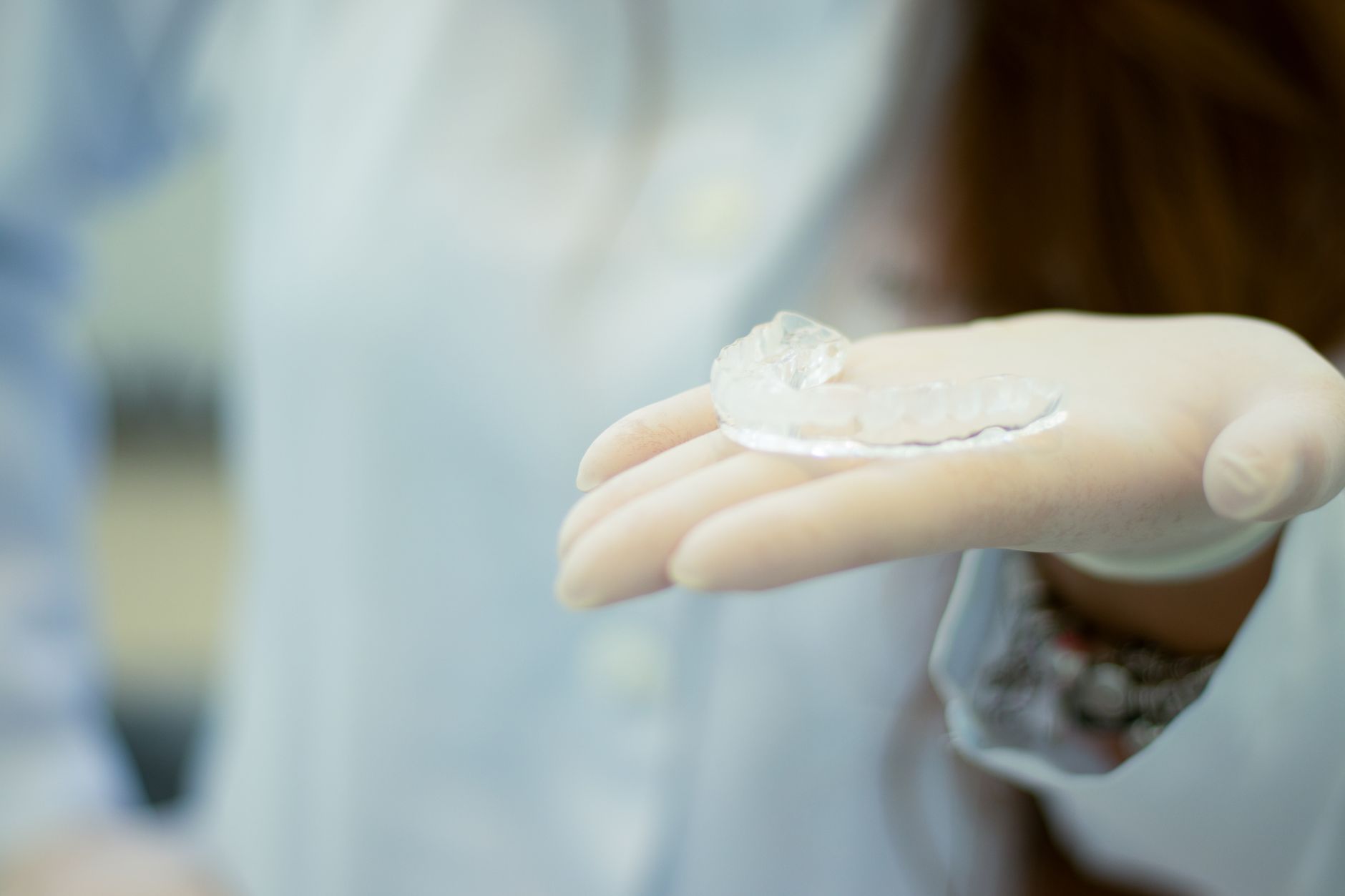
After braces, wear your retainer full-time for the first 6 to 12 months, then nightly for life. Clean it daily with a soft toothbrush and mild soap. Consistent wear is the only thing preventing teeth from shifting back.
After braces, wear your retainer full-time for the first 6 to 12 months. Then wear it nightly for life. Clean it daily with a soft toothbrush and mild soap. Consider a 16-year-old in West Covina. She loses her clear Essix retainer three months after braces come off. At $100–$400 per arch, replacing it represents a significant out-of-pocket cost (pmc.ncbi.nlm.nih.gov). If her parents had ordered a spare set when treatment ended, they would have avoided rapid tooth shifting. They also would have avoided an emergency orthodontist visit. Consistent wear is the only thing preventing teeth from shifting back.
How Long Should You Wear Your Retainer After Braces?
The retention phase is not optional. After your braces treatment ends, your teeth are sitting in newly remodeled bone that has not yet fully stabilized. Most orthodontists recommend full-time retainer wear for the first 4 to 12 months — most commonly 4 to 6 months per the Canadian Association of Orthodontists, or up to 9 to 12 months per many orthodontists — then switching to nightly wear long-term, often indefinitely, to prevent teeth from shifting back (newsmilelife.com.au). The biological reality is that teeth have a natural memory and will migrate toward their original positions unless held in place by consistent retainer wear. Nightly wear for life is not an exaggeration. It is the clinical standard.
What Happens If You Stop Wearing Your Retainer?
Teeth begin shifting within days to weeks of stopping retainer use. This is not a slow, gradual process in the early months after braces. Front teeth and lower crowding are the most common areas of early relapse, because those teeth experience the greatest pressure from lips, tongue, and chewing forces. Skipping even a few nights during the first year can cause a retainer to feel noticeably tight, which is a direct signal that teeth have moved. In severe cases, relapse requires a second round of orthodontic treatment, including braces or clear aligners, to correct. The first year after treatment is the window of greatest risk. The bone around your teeth is still remodeling and vulnerable to any consistent force. Protecting that result is far less costly than retreating it later.
Do Adults Need to Wear Retainers Differently Than Teens?
Adults have denser bone than teenagers, but that does not make them immune to tooth movement. Gum recession and minor bone loss, which are common in adults over 30, can actually accelerate unwanted tooth migration over time. Teens undergoing orthodontic treatment during jaw development may require longer full-time wear phases, but the nightly-for-life recommendation applies equally across age groups. At One Smile Orthodontics in West Covina, our team regularly sees adult patients who completed braces 10 or 20 years ago and lost or stopped wearing their retainer. Many need a new retention appliance and, in some cases, additional orthodontic treatment to address the relapse that accumulated. The conclusion is the same regardless of age: nightly retainer wear prevents teeth from shifting back, and it must continue indefinitely.
Types of Retainers: Which One Is Right for You?
Choosing the right retainer type is not a one-size-fits-all decision. Your orthodontist evaluates your bite type, compliance history, the specific teeth treated, and your lifestyle before recommending a retention protocol. The three main options are Hawley retainers, clear Essix retainers, and fixed bonded retainers. Many patients receive a combination, such as a bonded lower wire plus a removable upper clear retainer. Each type carries distinct durability, maintenance requirements, and cost profiles. Patient-specific factors, including whether you grind your teeth, play contact sports, or travel frequently, all influence which retainer is the best fit for your West Covina orthodontic treatment plan.
| Retainer Type | Appearance | Durability | Maintenance |
|---|---|---|---|
| Hawley (Wire + Acrylic) | Visible wire on front | 5-10+ years | Brush with toothbrush; soak weekly |
| Clear Essix | Nearly invisible | 1-3 years | Daily brush, avoid heat |
| Fixed/Bonded Wire | Invisible (behind teeth) | 10+ years with care | Floss threader or water flosser required |
What Is a Fixed or Permanent Retainer?
A fixed or bonded retainer is a thin wire attached to the back surfaces of your front teeth, most commonly the lower arch. It is invisible from the outside and requires zero patient compliance for daily wear, making it a popular choice for patients with a history of relapse risk or teenagers who may forget to wear a removable retainer. Research on bonded retainer survival rates is instructive. These numbers do not mean bonded retainers are unreliable. They mean routine monitoring matters. With proper care and regular dental visits, a bonded retainer can last 10 or more years. Wire breakage requires prompt repair — patients should contact their orthodontist as soon as possible to prevent tooth movement, as urgency is highest in the months immediately following orthodontic treatment.
What Is a Clear (Essix) Retainer?
Clear Essix retainers look nearly identical to Invisalign aligners and are custom-made from a digital scan or dental impression of your teeth. They are the most popular removable option among aesthetics-conscious adults and teens in West Covina and beyond, because they are essentially invisible when worn. 클리어 Essix 리테이너는 착용 패턴에 따라 1~3년마다 교체가 필요할 수 있다 (beverlyhillsortho.com), making them a recurring cost over a lifetime of retention. Hawley 리테이너는 클리어 리테이너보다 훨씬 오래 사용할 수 있다. The tradeoff is aesthetics: Hawley retainers have a visible wire across the front teeth. The right choice depends on your priorities. If discretion matters most and you are comfortable replacing the appliance every few years, clear retainers are an excellent option. If you want maximum longevity with the lowest long-term replacement frequency, a Hawley or fixed retainer may be more practical.
How to Clean and Maintain Your Retainer Properly
Proper cleaning is not just about hygiene. It directly affects how long your retainer lasts and how well it continues to fit your teeth. Daily cleaning is the minimum standard. Use a soft-bristle toothbrush and mild dish soap or a retainer-specific cleaning solution. Never use toothpaste on a clear retainer. Toothpaste contains abrasive particles that scratch the surface of clear plastic, creating microscopic grooves where bacteria and biofilm accumulate. Research on biofilm formation on clear orthodontic retainer materials confirms that surface condition significantly affects bacterial attachment (pmc.ncbi.nlm.nih.gov), which is why surface integrity matters as much as daily brushing.
Beyond daily brushing, soak your removable retainer two to three times per week using a dedicated retainer cleaning solution. Ultrasonic cleaners, available at most pharmacies, are an excellent option for patients who want a deeper clean without chemical soaking. Ultrasonic vibration dislodges plaque and biofilm from areas a toothbrush misses. Never boil your retainer, microwave it, or soak it in mouthwash. Heat warps the plastic permanently, destroying the precise fit that keeps your teeth in position. Alcohol-based mouthwashes can strip protective coatings from some retainer materials. Storage matters too. Keep your retainer in its case whenever it is not in your mouth.
How Do You Clean a Fixed Bonded Retainer?
Cleaning a bonded retainer requires a different approach than cleaning a removable one. The wire runs behind your front teeth, creating spaces that a standard toothbrush cannot reach. Use a floss threader or orthodontic floss to clean beneath the wire daily. Thread the floss under the wire between each pair of teeth, move it gently up and down along the tooth surface, and repeat for each gap. Water flossers are highly effective for flushing food debris and bacteria from around the wire and gumline. Mention your bonded retainer to your dental hygienist at every cleaning appointment so they can scale around the wire properly. Watch for early warning signs of wire debonding: a slight movement or gap visible between the wire and the tooth surface. Do not wait. A partially debonded wire exerts uneven force and can cause unwanted tooth movement quickly.
Retainer Replacement Costs: What to Expect in 2026
Retainer replacement costs depend on the type of appliance, the provider, and your location. These ranges reflect national averages. In Southern California, particularly in areas like West Covina where the cost of running a dental practice is higher than the national median, fees toward the upper end of each range are common. That said, cost variation is driven by more than geography. Orthodontic specialists typically charge more for retainer fabrication than general dentists, but the precision of the appliance is generally higher. Digital scanning-based retainers cost more upfront than impression-based ones but often fit more accurately and last longer, reducing long-term replacement frequency.
Many orthodontic practices include the initial set of retainers in the overall treatment fee, which is standard practice at One Smile Orthodontics. The replacement cost question becomes relevant when a retainer is lost, broken, or worn out after treatment ends. If your PPO dental insurance includes an orthodontic benefit, retainer replacement may be partially covered, but many plans limit coverage to the original course of treatment. Always verify your specific plan's appliance benefit before assuming coverage. FSA(Flexible Spending Account) 및 HSA(Health Savings Account)는 리테이너 교체 비용에 사용할 수 있어, 실질적인 비용 부담을 줄이는 효과적인 방법이 된다. Some practices offer reduced-cost replacement retainers for a defined period after treatment as part of a retention guarantee program.
Does Dental Insurance Cover Retainer Replacement?
캘리포니아 Medi-Cal Dental은 승인된 교정 치료의 일환으로 교정 유지 장치(리테이너 제작 및 장착, CDT D8680)를 급여 항목으로 포함하며 최대 1년간의 유지 관리를 보장하지만, 승인된 유지 기간 이후 분실 또는 파손된 리테이너 교체 비용은 일반적으로 급여 대상이 아니므로 환자는 초기 유지 단계 이후 교체 비용이 본인 부담이 될 수 있음을 유의해야 한다. Flexible Spending Accounts and Health Savings Accounts are eligible for retainer costs, giving patients a tax-advantaged way to budget for replacements. Verify your specific plan's terms before scheduling a replacement appointment.
Signs You Need a New Retainer and When to Call Your Orthodontist
Recognizing when a retainer has reached the end of its useful life is essential to protecting your orthodontic results. Do not wait for an obvious break. A retainer that feels tighter than usual when you insert it is telling you something. It means your teeth have shifted enough that the appliance no longer matches your current tooth position. That tightness is not harmless pressure. Continued wear of an ill-fitting retainer can move teeth in unintended directions. Visible cracks, chips, or warping are immediate reasons to call your orthodontist. A cracked retainer cannot maintain the precise force distribution required for retention. Warping, usually from heat exposure, changes the fit geometry entirely. Both conditions require replacement, not continued use.
A persistent odor despite regular cleaning is another signal. Severe biofilm buildup that does not respond to routine cleaning may indicate surface degradation of the retainer material. Professional evaluation can determine whether the appliance can be rehabilitated or must be replaced. Teeth that look visibly different from photos taken at the end of your braces treatment are a clear sign of relapse, and that warrants a full consultation, not just a new retainer. In some West Covina cases we have seen, patients who delayed replacing a lost retainer for several months required a short course of clear aligner refinements before a new retainer could be fabricated, because the teeth had shifted too far for the retainer alone to manage. Time is not neutral when it comes to orthodontic relapse.
What Should You Do If You Lose Your Retainer?
Act fast. Call your orthodontist within 24 to 48 hours to schedule a new impression or digital scan. Every day without a retainer is a day your teeth are free to shift. If you have a previous set of retainers from an earlier replacement, wear the older set temporarily, but only if it seats fully without forcing it. Do not force a retainer that does not fit, as this can move teeth incorrectly. Consider ordering a spare set proactively, especially for teenagers, who lose retainers at a higher rate than adults. The cost of a spare set is far less than the cost of retreatment.
Frequently Asked Questions
How long do I have to wear my retainer after braces?
What is the best way to clean a clear retainer?
How much does it cost to replace a lost retainer?
Can I stop wearing my retainer after a few years?
What happens if my fixed retainer breaks?
Is it normal for my retainer to feel tight after not wearing it for a few days?
Does insurance cover retainer replacement after orthodontic treatment ends?
What is the difference between a Hawley retainer and a clear retainer?
Can I eat and drink with my retainer in?
How long should I wear my retainer each day after braces?
What's the cheapest retainer type to replace?
How do I clean a clear retainer without damaging it?
How much does a permanent retainer cost to fix?
When should I replace a retainer due to wear or cracks?
Sources & References
- Evaluation of biofilm formation on different clear orthodontic retainer materials – PMC (opens in a new tab)[industry]
- Long-term bonded retention after closure of maxillary midline diastema – PubMed (Vanderbilt University) (opens in a new tab)[factcheck]
- Long-term effects of various cleaning methods on polypropylene/ethylene copolymer retainer material - PMC (NIH/NLM) (opens in a new tab)[factcheck]
About the Author
One Smile Orthodontics
One Smile Orthodontics is a West Covina practice led by Dr. Namgu Kim, offering board-certified expertise in braces, Invisalign, and airway orthodontics for all ages.
Learn more at www.onesmileorthodontics.com → (opens in a new tab)Related Posts

7 Foods You Cannot Eat With Braces (And What to Eat Instead)
Braces are a significant investment in your smile, and what you eat can make or break your progress. This guide covers the 7 most damaging foods to avoid during orthodontic treatment, explains exactly why they cause problems, and offers delicious safe alternatives so you never feel deprived.
14 min read
Lingual Braces vs. Invisalign: Which Is Better for Adults Who Want Hidden Treatment?
Both lingual braces and Invisalign offer nearly invisible orthodontic treatment for adults, but they work very differently and suit different cases. This comparison breaks down cost, comfort, effectiveness, and lifestyle fit so you can choose the right hidden treatment for your smile goals.
9 min read
How to Keep Teeth Clean With Braces: A Step-by-Step Brushing and Flossing Guide
Keeping teeth clean with braces requires more effort than regular brushing, but the right technique makes it manageable. This step-by-step guide covers brushing angles, flossing methods, and the tools that protect your smile while you straighten it.
13 min read