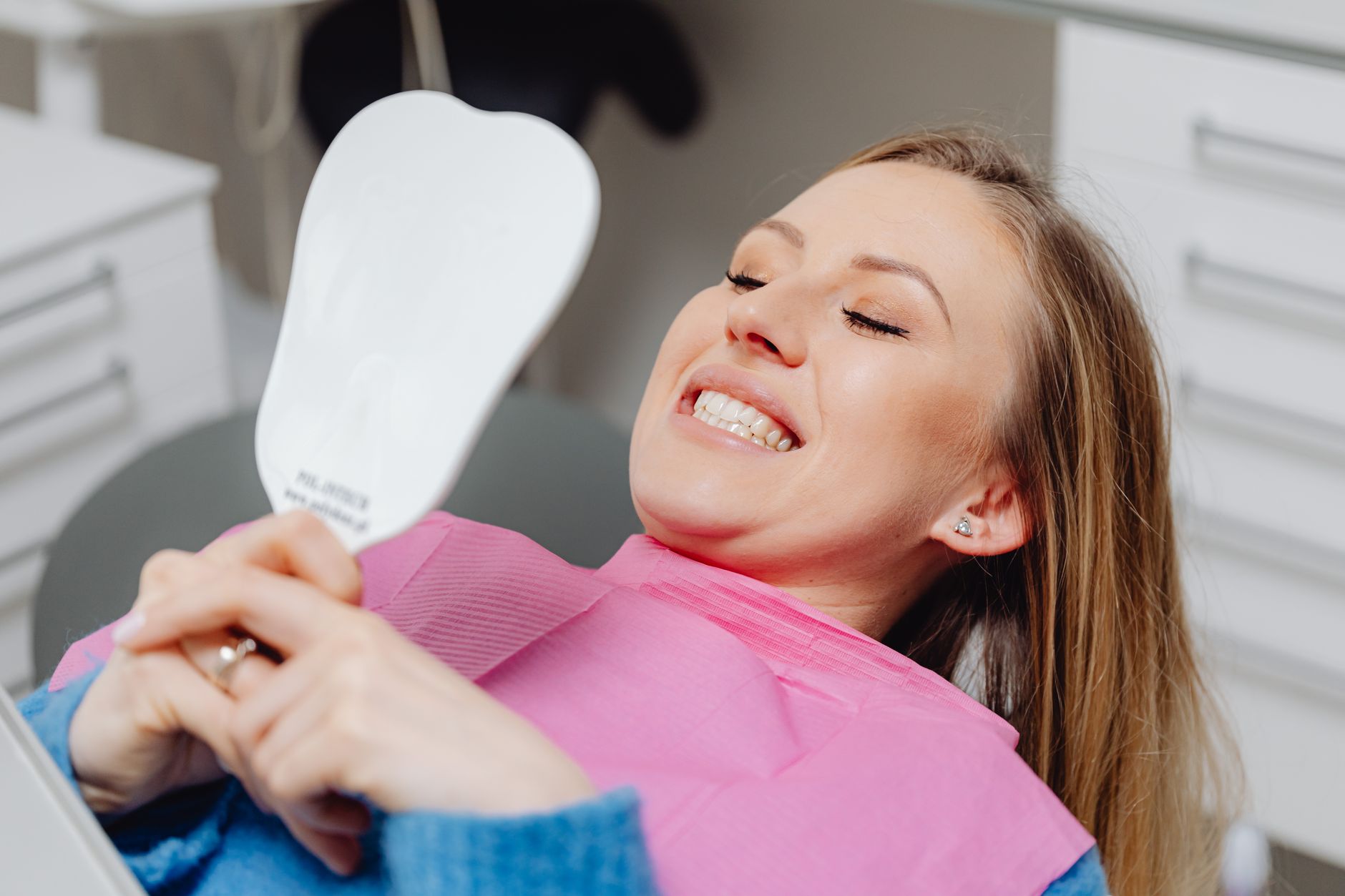
Teeth shift after Invisalign primarily because retainers are not worn consistently, allowing natural bone and ligament forces to pull teeth back toward their original positions. Long-term stability is closely related to changes taking place within the first 3 to 12 months post-treatment, and relapse risk remains an ongoing concern beyond that window. Wearing your retainer every night and scheduling a follow-up with your orthodontist can stop or reverse minor shifting quickly.
Teeth shift after Invisalign primarily because retainers are not worn consistently. Natural bone and ligament forces pull teeth back toward their original positions. Consider a West Covia teenager who completed Invisalign treatment. She skipped retainer wear for three nights during a family vacation. She noticed crowding when she resumed wearing the retainer. Within a week of consistent nightly wear, the fit tightened noticeably, confirming that early relapse had begun but was still reversible with retainer compliance. Long-term stability is closely related to changes taking place within the first 3 to 12 months post-treatment, and relapse risk remains an ongoing concern beyond that window. Wearing your retainer every night and scheduling a follow-up with your orthodontist can stop or reverse minor shifting quickly.
Why Do Teeth Shift After Invisalign Treatment?
Your teeth are not anchored rigidly in your jaw. They are held in place by a network of soft tissue, bone, and the periodontal ligament, all of which carry biological memory of where your teeth used to sit. When Invisalign treatment ends, those structures do not immediately accept the new tooth positions as permanent. The bone surrounding each tooth root undergoes ongoing remodeling after treatment ends, though the precise timing of alveolar bone modeling is still unknown and maturation may occur over a period of weeks to months or longer. During that window, your teeth are genuinely vulnerable. Natural forces you generate every day move teeth gradually. These include chewing, speaking, and tongue pressure. Without a retainer, teeth shift over time. This is not a flaw in Invisalign or in your treatment. It is basic biology, and it affects every orthodontic patient regardless of whether they used clear aligners or traditional braces.
Wisdom teeth eruption adds another layer of risk. As third molars push forward, they can create crowding pressure that cascades through the arch, nudging front teeth out of alignment even years after successful treatment. Gum disease and bone loss accelerate relapse further by weakening the very structures designed to anchor teeth in position. West Covina patients who complete Invisalign treatment should treat the retention phase with the same seriousness as the active treatment phase, because biologically, the work is not finished when the last aligner comes out.
What Is the Periodontal Ligament and Why Does It Matter?
The periodontal ligament, or PDL, is a thin band of connective tissue fibers that connects each tooth root to the surrounding alveolar bone. Think of it as a suspension system with elastic memory. During Invisalign treatment, the PDL stretches and compresses as teeth are guided into new positions. When aligners are removed at the end of treatment, the PDL does not immediately relax into its new configuration. Instead, it actively pulls back toward its original resting length, creating tension that physically moves teeth. This is why teeth can start shifting within days to weeks of stopping retainer wear, not months. The force is subtle but constant. Retainers keep teeth immobile long enough for bone to mineralize. This resets the PDL's resting length. Without that stability, PDL tension wins. This biomechanical reality explains why the first months after treatment represent the highest-risk period for relapse, and why skipping even a few nights of retainer wear during that window can produce a noticeable tightening in fit.
Does Invisalign Cause More Shifting Than Braces?
Relapse risk is comparable between Invisalign and traditional braces when retention protocols are followed consistently. The type of appliance used during active treatment is not the determining factor. Patient compliance with retainer wear is. The real variable is whether patients maintain a structured, long-term retention plan supervised by a board-certified orthodontist. Cases treated without in-person monitoring or a customized retention protocol carry higher relapse risk, not because of the aligner material, but because retention is not tailored to the individual's case complexity. At One Smile Orthodontics, Dr. Namgu Kim builds the retention protocol into every treatment plan from the start, so patients in West Covina and the San Gabriel Valley leave with a clear, personalized roadmap for protecting their results, not just a generic instruction sheet. In our experience, patients who understand their retention plan from day one are significantly more likely to maintain consistent retainer wear and avoid relapse complications.
How to Tell If Your Teeth Are Actually Shifting
Early detection dramatically changes your outcome. Catching relapse at the minor stage means correction is fast, simple, and far less costly than addressing significant movement that has gone unnoticed for months. The most reliable early warning sign is your retainer fit. A retainer that fits snugly but seats fully suggests minor, reversible movement. One that will not seat completely, causes sharp pain, or leaves visible gaps between the tray and your teeth signals that significant shifting has occurred and requires professional evaluation. Forcing a retainer that does not fit is dangerous. It can exert asymmetrical forces on teeth and cause soft tissue damage, making the situation worse rather than better.
Beyond the retainer test, watch for visible changes in the front teeth, which are the most susceptible to relapse. Crowding, rotation, or new gaps are more advanced indicators. Bite changes, where teeth no longer meet the way they did after treatment, signal that movement has affected your occlusion. Sensitivity or discomfort when biting can accompany these occlusal shifts. Dental photos taken immediately post-treatment serve as an invaluable comparison baseline. If you did not take them, your orthodontist's post-treatment records fill that role. Any discomfort, visual change, or fit problem warrants a check, not a wait-and-see approach.
The Retainer Test: What a Tight Fit Is Telling You
A retainer that feels noticeably tighter after a single missed night is delivering real clinical information. Minor tightness that resolves after 24 to 48 hours of consistent wear usually means the movement was negligible and reversible. Tightness that persists after resuming full wear, or discomfort that intensifies when the retainer is in, means teeth have moved beyond what passive retainer pressure can reverse. At that point, retainer wear alone will not return teeth to their corrected positions, and a professional scan is needed to quantify what has changed. Do not wait for the situation to become visually obvious. By the time you can see the difference in a mirror, the amount of tooth movement is likely beyond what a retainer alone can address.
Proven Ways to Stop Teeth Shifting After Invisalign
Prevention is always simpler than correction. The evidence-based standard for the first 12 months post-treatment is nightly retainer wear without exception. After that initial high-risk window closes, your orthodontist will reassess your case and adjust the schedule, but for most patients, indefinite nightly wear remains the recommendation. Replace lost or damaged retainers within 24 to 48 hours. Every hour without a retainer during the first year post-treatment is an opportunity for the PDL to begin pulling. Schedule annual retainer check appointments even years after treatment ends, because jawbone and gum health change over time and so do retention needs. Gums, bone, and muscles need time to fully adapt after aligners finish their work, and ongoing monitoring ensures that adaptation is happening correctly.
Addressing the underlying causes of relapse matters as much as wearing the retainer itself. Mouth breathing positions the tongue low in the mouth, removing the natural internal pressure that helps maintain arch width. Tongue thrust creates a forward force against upper front teeth during every swallow. Bruxism generates lateral forces that push teeth out of alignment on a nightly basis. These habits work against retainer stability and must be addressed as part of a comprehensive retention strategy.
Removable vs. Fixed Retainers: Which One Is Right for You?
The comparison between retainer types carries real clinical consequences, and the data supports a clear hierarchy. A peer-reviewed study of 150 orthodontic patients found that patients using permanent bonded retainers experienced a mean anterior relapse of just 0.2 mm, compared to 1.0 mm in patients using Hawley retainers and 0.8 mm in patients using Essix-style clear retainers (pmc.ncbi.nlm.nih.gov). The same study measured posterior relapse at 0.1 mm for bonded retainer patients versus 0.6 mm for Essix users (pmc.ncbi.nlm.nih.gov). These numbers show that fixed retainers outperform removable options by a meaningful margin, particularly for patients with a history of significant crowding corrections.
| Retainer Type | Mean Anterior Relapse | Mean Posterior Relapse | Compliance Required |
|---|---|---|---|
| Permanent Bonded (Fixed) | 0.2 mm | 0.1 mm | None (passive) |
| Essix / Clear Removable | 0.8 mm | 0.6 mm | High (nightly wear) |
| Hawley (Wire + Acrylic) | 1.0 mm | 0.8 mm | High (nightly wear) |
Many orthodontists recommend a hybrid approach: a fixed wire bonded to the back of lower front teeth combined with a removable clear retainer worn nightly. This strategy captures the passive stability of a fixed appliance while maintaining oversight of the full arch through the removable component. Fixed retainers require flossing with a threader and regular monitoring for wire breaks or bond failures at every dental cleaning.
Why Nighttime Habits Like Grinding Undermine Your Results
Bruxism is more common than most people realize. Sleep bruxism affects 15% to 40% of children and 8% to 10% of adults globally (ncbi.nlm.nih.gov). These figures matter for orthodontic retention because grinding generates lateral and eccentric forces that override the stabilizing effect of retainers, particularly removable ones. A nightguard worn simultaneously with or instead of a clear retainer can protect both tooth enamel and alignment. Mouth breathing and tongue thrust create constant low-grade anterior pressure that gradually shifts upper front teeth forward over months and years. Myofunctional therapy addresses the tongue posture and breathing patterns driving this pressure. An airway orthodontics evaluation may reveal structural contributors, such as a narrow palate or obstructed airway, that are perpetuating these habits. Treating the habit is not optional if the goal is long-term stability.
What to Do If Your Teeth Have Already Shifted Significantly
If your retainer no longer fits and you can see or feel changes in your alignment, do not delay. Early intervention after relapse requires far less treatment time and cost than waiting until movement progresses. Minor relapse involving small amounts of tooth movement can often be corrected with Invisalign refinement aligners, which are designed to address cases where teeth have not moved exactly as the original treatment plan predicted. Moderate to severe relapse may require a full new course of Invisalign treatment or, in select cases, traditional braces. A retainer alone will not move teeth back to their corrected positions once significant shifting has occurred, because retainers are designed to maintain tooth position rather than generate the controlled forces needed to reposition teeth that have already moved.
Your orthodontist will take updated records including current photographs, X-rays, and a digital intraoral scan to accurately map what has changed since your original treatment. This clinical baseline is essential for designing an accurate correction plan. Patients in the West Covina area and across the San Gabriel Valley can schedule a relapse evaluation at One Smile Orthodontics, where Dr. Kim reviews each case personally rather than delegating assessment to a treatment coordinator.
Can Invisalign Fix Relapse From a Previous Invisalign Treatment?
Yes. Invisalign can treat post-treatment relapse regardless of whether the original treatment used Invisalign or traditional braces. Case refinements — additional aligners that doctors may order to achieve treatment goals or further perfect final results — are available, and some orthodontists include them within original treatment warranties. The scope and cost of correction depend on how much movement has occurred and how long ago active treatment was completed. Cases corrected within the first year of relapse tend to resolve faster and with fewer aligners than cases where shifting has been accumulating for two or more years. Starting correction earlier, even for mild relapse, results in shorter treatment times and lower overall costs. Many West Covina orthodontic patients are surprised to learn that PPO insurance orthodontic benefits may apply to retreatment, and financing plans can make returning to treatment accessible even without insurance coverage. The key is acting before minor relapse becomes a major reconstruction.
How to Protect Your Invisalign Results for Life
Long-term results require a long-term commitment. The evidence-based standard for most patients is indefinite nightly retainer wear. This is not a conservative recommendation from a cautious provider. It reflects the ongoing biological reality that teeth never fully stop responding to the forces placed on them. Replace clear retainers periodically or when visible warping, cracking, or discoloration appears, because a degraded retainer does not hold teeth effectively even when worn consistently. Maintain twice-yearly professional dental cleanings to prevent gum disease, which weakens the bone and soft tissue that anchor teeth in place and dramatically accelerates long-term instability. Communicate any changes in retainer fit, bite comfort, or visible alignment to your orthodontist immediately rather than waiting for the next scheduled visit.
Children and teens who complete Invisalign for teens have an additional layer of complexity: jaw growth continues through the late teens and into early adulthood, which means retention protocols must be reviewed and adjusted as development continues. A doctor-led practice where the same orthodontist sees the patient at every visit, rather than rotating through multiple providers, is the structural advantage that enables early detection of subtle changes before they compound.
How Often Should You See Your Orthodontist After Invisalign?
Most orthodontists schedule periodic follow-up visits during the first 12 to 24 months after treatment to monitor retainer fit and tooth stability, after which ongoing monitoring is typically transferred to the patient's general dentist; there is no universally standardized schedule, and visit frequency is tailored to each patient's case. Patients with fixed retainers should have wire integrity assessed at every dental cleaning appointment, because a broken bond or fractured wire can go unnoticed and allow a tooth to drift without any patient awareness. Any time a retainer feels tighter than usual or will not seat cleanly, an unscheduled evaluation is warranted rather than waiting for the next calendar appointment. Teens and young adults still experiencing jaw development may benefit from more frequent check-ins through age 21. At One Smile Orthodontics in West Covina, CA, patients see Dr. Kim directly at every visit, which means subtle changes in alignment or retainer fit are caught by someone who knows the case from the start, not by a rotating staff member reviewing notes. Our team has found that continuity of care during the retention phase makes the critical difference between catching early relapse and missing problems until they require extensive retreatment.
Retainer Replacement vs. Retreatment: Understanding the Cost Stakes
Replacing a worn or lost retainer costs a fraction of the investment required for a new course of orthodontic treatment. A new set of clear retainers is straightforward and fast when teeth are still in their corrected positions. Once significant relapse has occurred, retreatment involves a full diagnostic workup, new aligners or braces, and a treatment timeline measured in months rather than days. The financial gap between these two scenarios is substantial. This is the practical argument for treating retainer replacement as a maintenance expense rather than an optional upgrade. Consider it the same way you consider an oil change for a vehicle: skip it long enough and the repair bill multiplies. For families in the San Gabriel Valley who have invested in Invisalign treatment, protecting that investment with consistent retainer care and annual orthodontic check-ins is the most cost-effective decision available.
Frequently Asked Questions
How quickly do teeth shift after stopping retainer use?
Can I fix minor shifting at home by wearing my old retainer?
How much does it cost to fix teeth shifting after Invisalign?
Does Invisalign come with a guarantee against teeth shifting?
How long do I have to wear a retainer after Invisalign?
Can wisdom teeth cause teeth to shift after Invisalign?
Is teeth shifting after Invisalign covered by dental insurance?
What happens if I ignore minor shifting after Invisalign?
Can retainers move shifted teeth back after Invisalign?
How long do I need to wear retainers after Invisalign?
Why do teeth relapse after Invisalign treatment?
What types of retainers work best after Invisalign?
When should I see an orthodontist for teeth shifting?
Sources & References
- Effectiveness of Different Retention Protocols in Preventing Posttreatment Relapse After Comprehensive Orthodontic Treatment - PMC (opens in a new tab)[edu]
- A longitudinal index study of orthodontic stability and relapse – Australian Orthodontic Journal (PubMed) (opens in a new tab)[factcheck]
- Bone Modeling after Orthodontic Extrusion: A Histomorphometric Pilot Study – PMC (MDPI Journal of Clinical Medicine, 2022) (opens in a new tab)[factcheck]
- Effectiveness of Different Retention Protocols in Preventing Posttreatment Relapse After Comprehensive Orthodontic Treatment – PMC (PubMed Central) (opens in a new tab)[factcheck]
- Bruxism Management - StatPearls - NCBI Bookshelf (opens in a new tab)[factcheck]
- Have orthodontists changed their retention and follow-up protocols due to contemporary orthodontics? An online survey (PubMed/PMC) (opens in a new tab)[factcheck]
About the Author
One Smile Orthodontics
One Smile Orthodontics is a West Covina practice led by Dr. Namgu Kim, offering board-certified expertise in braces, Invisalign, and airway orthodontics for all ages.
Learn more at www.onesmileorthodontics.com → (opens in a new tab)Related Posts

7 Foods You Cannot Eat With Braces (And What to Eat Instead)
Braces are a significant investment in your smile, and what you eat can make or break your progress. This guide covers the 7 most damaging foods to avoid during orthodontic treatment, explains exactly why they cause problems, and offers delicious safe alternatives so you never feel deprived.
14 min read
Lingual Braces vs. Invisalign: Which Is Better for Adults Who Want Hidden Treatment?
Both lingual braces and Invisalign offer nearly invisible orthodontic treatment for adults, but they work very differently and suit different cases. This comparison breaks down cost, comfort, effectiveness, and lifestyle fit so you can choose the right hidden treatment for your smile goals.
9 min read
How to Keep Teeth Clean With Braces: A Step-by-Step Brushing and Flossing Guide
Keeping teeth clean with braces requires more effort than regular brushing, but the right technique makes it manageable. This step-by-step guide covers brushing angles, flossing methods, and the tools that protect your smile while you straighten it.
13 min read