← All Posts
Orthodontist examining a patient's mouth and airway for sleep apnea treatment options

Sleep Apnea Treatment Without CPAP: Custom Oral Appliances From Your Orthodontist

By One Smile Orthodontics17 min read

A custom oral appliance from an orthodontist treats mild to moderate sleep apnea by gently repositioning your lower jaw to keep the airway open during sleep. Unlike CPAP machines, these devices are silent, portable, and worn like a mouthguard. Most patients see significant symptom reduction within 4 to 8 weeks of consistent use.

A custom oral appliance from an orthodontist treats mild to moderate sleep apnea by gently repositioning your lower jaw to keep the airway open during sleep. Unlike CPAP machines, these devices are silent, portable, and worn like a mouthguard. Most patients see significant symptom reduction within 4 to 8 weeks of consistent use. For example, consider a 52-year-old parent in West Covina with an AHI of 18 (mild to moderate sleep apnea) who abandoned CPAP after three months due to mask discomfort and claustrophobia. After receiving a custom mandibular advancement device from Dr. Kim and titrating over 8 weeks, a follow-up sleep study showed their AHI dropped to 4, eliminating daytime fatigue and allowing them to sleep soundly through the night without disruption to their spouse. The entire process, from initial airway evaluation to therapeutic jaw position, took 12 weeks.

What a Sleep Apnea Oral Appliance Is and How It Works

Oral appliances are FDA-cleared medical devices custom-fabricated to each patient's unique bite and airway anatomy. The most widely prescribed type, the mandibular advancement device (MAD), works by physically advancing the lower jaw forward by 5 to 10 mm. That forward position tightens the soft tissues of the posterior airway, preventing the collapse that causes apnea events and snoring. At One Smile Orthodontics, we've observed that patients often achieve noticeable improvements in sleep quality and daytime alertness once the airway is properly stabilized by the appliance. The physics are straightforward: a wider, more rigid airway lets air pass without turbulence or obstruction. No mask, no hose, no power source. Published clinical data from a prospective study of 135 patients found that oral appliance therapy reduced AHI by 59.6% from baseline (escholarship.org). That is a clinically meaningful reduction, not a rounding error. Treatment is grounded in dental sleep medicine, a recognized subspecialty supported by the American Academy of Sleep Medicine (AASM), which endorses oral appliances as a first-line therapy for eligible patients (sleepfoundation.org).

Mandibular Advancement Devices vs. Tongue-Retaining Devices

MADs are the dominant device type in clinical practice. They work by advancing the mandible forward, which simultaneously draws the tongue away from the posterior pharyngeal wall. The result is a measurably larger airway cross-section during sleep. In one peer-reviewed study, mean AHI dropped from 34.25 at baseline to 2.67 after MAD treatment, and hypopnea events fell from 215.5 to 5 (opendentistryjournal.com). Tongue-retaining devices (TRDs) offer an alternative for patients whose jaw joints cannot tolerate advancement. TRDs use a small suction bulb to hold the tongue forward without moving the mandible at all. Effectiveness is well-documented in peer-reviewed literature for both device categories. Before selecting a device type, an orthodontist evaluates jaw joint health, existing bite relationships, and airway anatomy. Our team has found that this individualized assessment is critical because one-size-fits-all approaches frequently result in poor compliance or suboptimal outcomes. That evaluation determines which appliance will deliver results without creating new problems.

Custom vs. Over-the-Counter Oral Appliances

Over-the-counter boil-and-bite devices are not the same category as custom appliances. Full stop. OTC devices are not fabricated from precise impressions, cannot be incrementally titrated, and are not FDA-cleared to treat obstructive sleep apnea. Custom appliances fabricated by a board-certified orthodontist are built from digital or physical impressions of your exact dentition, allowing millimeter-level precision in jaw positioning. They also allow incremental titration, meaning the orthodontist can advance or retract the jaw position at follow-up visits to optimize both comfort and therapeutic effect. Most PPO medical insurance plans cover custom, FDA-cleared appliances under HCPCS code E0486. They do not cover OTC devices. The difference in clinical outcome between a custom appliance and a generic device is not subtle.

Treatment Comparison: CPAP, Custom Appliance, and OTC Device

Feature CPAP Machine Custom Oral Appliance OTC Boil-and-Bite Device
Best for Moderate to severe OSA Mild to moderate OSA; CPAP-intolerant patients Snoring only (not recommended for OSA)
Effectiveness (AHI reduction) 5 (opendentistryjournal.com)0-90% reduction (gold standard) 30-70% reduction depending on severity Minimal; not clinically validated for apnea
Comfort Low for many patients; mask and pressure issues High; worn like a mouthguard Variable; poor fit common
Custom fit Machine settings adjusted; mask sized Fabricated from precise impressions by orthodontist No; generic fit
Titration/adjustment Pressure settings adjusted by sleep tech Jaw position adjusted incrementally by orthodontist None
Portability Requires machine, hose, power source Fits in a small case; travel-friendly Fits in a case; travel-friendly
Insurance coverage Usually covered by medical insurance Usually covered by medical insurance with physician Rx Not covered; not FDA-cleared for OSA
TMJ / bite monitoring Not applicable Monitored at follow-up appointments None
Typical cost $500-$3,000 with insurance $1,800-$3,500; often partially covered $20-$100 out of pocket
Provider Sleep medicine physician / DME supplier Board-certified orthodontist or credentialed dentist No provider; purchased online or in-store

Who Qualifies for an Oral Appliance Instead of CPAP

Qualifying for oral appliance therapy requires a formal diagnosis first. Orthodontists do not diagnose sleep apnea. A sleep study, either a laboratory polysomnography or a home sleep test ordered by a physician, must confirm the diagnosis before treatment can begin. Once that diagnosis exists, the AASM recommends oral appliances as first-line therapy for mild to moderate obstructive sleep apnea, defined as an AHI between 5 and 30 events per hour. Patients with severe OSA who cannot tolerate CPAP are also candidates under the AASM's updated guidelines. Up to 83% of people with sleep apnea who are prescribed CPAP therapy do not use it as often as directed (sleepfoundation.org), which makes oral appliance therapy a clinically urgent alternative, not just a preference. In our experience treating West Covina patients, the portability and silent operation of a custom appliance dramatically improve long-term adherence compared to CPAP machines. Patients must also have sufficient healthy teeth, typically 8 to 10 teeth in each arch, to retain the device. Adults with active TMJ disorders require careful evaluation before jaw-advancing appliances are prescribed.

Signs You May Be a Good Candidate

Several clinical and lifestyle factors point toward oral appliance therapy as the right path. A diagnosed AHI between 5 and 30 on a sleep study is the primary clinical criterion. History of CPAP non-compliance matters too. Common reasons for intolerance include claustrophobia from the mask, pressure discomfort, noise, and difficulty sleeping with a hose attached. Frequent travel is another practical factor. CPAP requires a machine, a humidifier chamber, a hose, a power adapter, and distilled water. A custom oral appliance fits in a hard-shell case the size of a hockey puck. No power required. Patients who snore without a confirmed apnea diagnosis, where a physician recommends conservative management, are also reasonable candidates. Dental eligibility requires no severe active periodontal disease and adequate tooth structure for appliance retention.

When an Orthodontist Refers to a Sleep Physician First

Severe OSA, defined as an AHI above 30, typically requires a sleep physician evaluation before oral appliance therapy begins. CPAP or surgical consultation is the standard starting point at that severity level. Central sleep apnea, a neurological breathing disorder distinct from obstructive apnea, requires physician management that extends beyond anything an oral appliance can address. At One Smile Orthodontics, we coordinate care directly with sleep physicians and primary care providers throughout the West Covina and San Gabriel Valley area. Dr. Namgu Kim reviews each patient's sleep study report and communicates findings back to the referring physician. That collaborative model protects patients and improves outcomes.

The Oral Appliance Fitting Process at an Orthodontic Practice

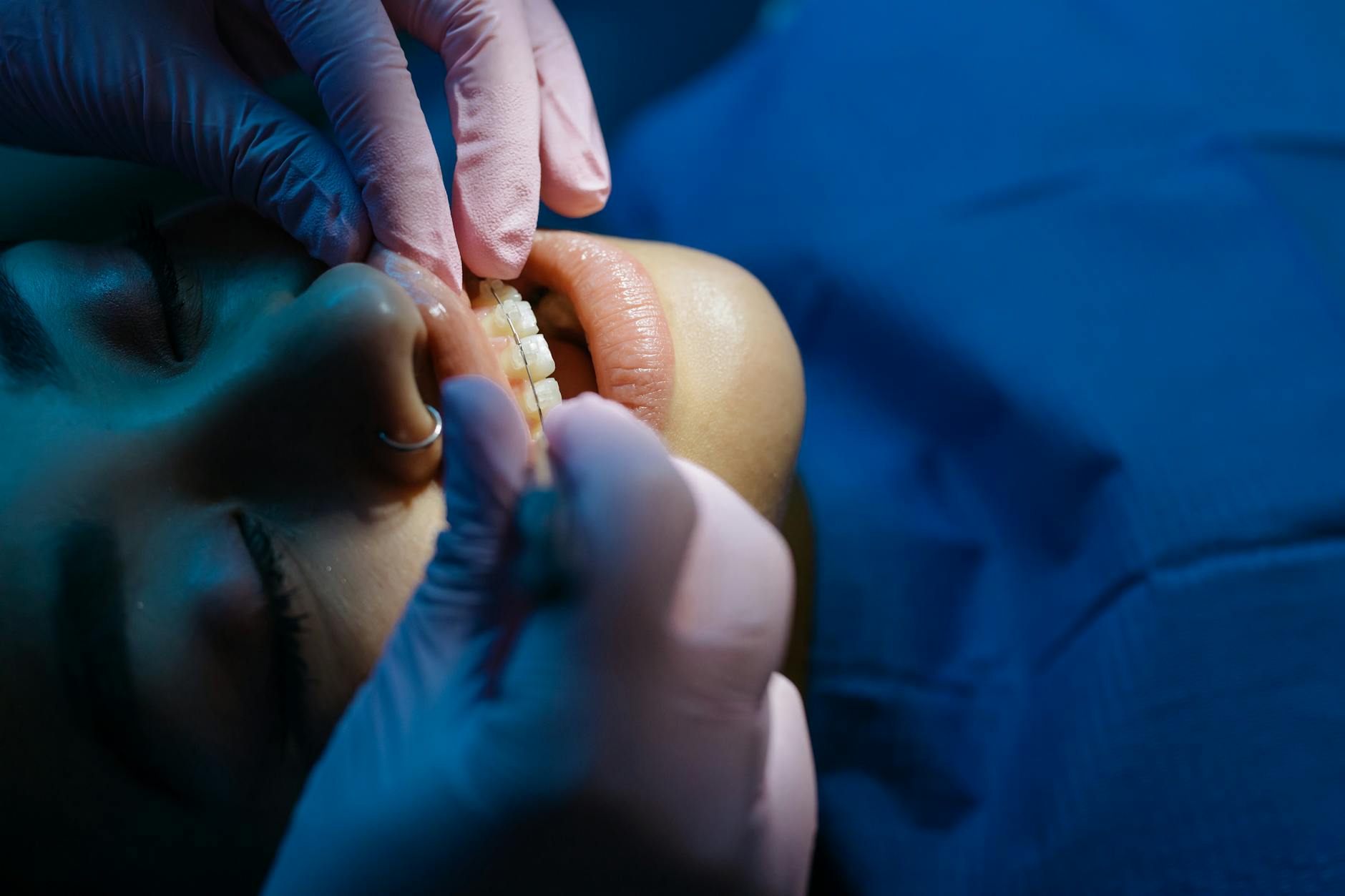
The process is methodical. Step one is a comprehensive airway and bite evaluation conducted by Dr. Kim personally, not a technician. He assesses tongue position, tonsil size, palatal width, nasal breathing capacity, and jaw joint health. He reviews the patient's sleep study report to align appliance design with documented AHI severity. Step two is digital scanning or physical impressions that capture the precise geometry of your dentition. Custom appliances fabricated from those records typically arrive from the dental laboratory within 2 to 4 weeks. Labs recommend a minimum of 7 business days from scan to seat appointment (digitaldentalleaders.com), though complex cases require longer. Step three is the delivery appointment, where fit and initial jaw position are confirmed. Steps four through six involve titration visits over 6 to 12 weeks, incrementally advancing the jaw to optimize both AHI reduction and patient comfort. A follow-up sleep study 6 to 12 weeks after reaching the target position confirms that the appliance is achieving the intended therapeutic effect. Annual check-ups monitor appliance wear and bite stability over the long term.

What Dr. Kim Evaluates at the Initial Consultation

Dr. Kim's initial evaluation covers five clinical domains. First, airway anatomy: tongue base position, tonsil grade, palatal width, and whether the patient is a nasal or mouth breather. Mouth breathing children in West Covina often present with narrow palates that compound airway obstruction, a structural issue that an oral appliance alone cannot resolve. Second, jaw joint health. MADs place mechanical load on the temporomandibular joints, and pre-existing TMJ pathology changes the treatment calculus. Third, the existing bite relationship and any skeletal discrepancies. Fourth, the sleep study report, which confirms diagnosis, severity classification, and oxygen desaturation data. Fifth, medical and dental history, including medications that affect sleep architecture, such as benzodiazepines or muscle relaxants. This evaluation takes time and requires clinical expertise. It is not a retail transaction.

Airway Orthodontics for Children: Early Intervention Before Problems Worsen

Sleep-disordered breathing in children rarely announces itself as "sleep apnea." Parents instead notice mouth breathing, restless sleep, snoring, bedwetting beyond typical age, or a child who cannot concentrate in school. These signs often trace back to a narrow palate or underdeveloped jaw that restricts airway volume. The American Association of Orthodontists recommends first orthodontic evaluations by age 7, precisely because skeletal problems are far easier to correct while growth is still active. Palatal expanders used in Phase 1 orthodontics widen the upper jaw and nasal floor, increasing airway volume structurally. We recommend early intervention for mouth-breathing children because addressing skeletal limitations during growth is far more effective than trying to manage them once facial development is complete. Early intervention may reduce or eliminate the need for tonsillectomy or adenoidectomy in some children. Waiting is not neutral. A child who mouth-breathes through elementary school is reshaping their facial skeleton in a direction that makes future airway problems more likely, not less.

Cost, Insurance Coverage, and Affordability in West Covina

Custom sleep apnea oral appliances typically range from $1,800 to $3,5 (opendentistryjournal.com)00 depending on device type and case complexity. That range sounds steep until you understand the billing pathway. Sleep apnea appliances are billed through medical insurance, not dental insurance, because they treat a diagnosed medical condition. PPO medical plans from Anthem Blue Cross, Blue Shield of California, and Aetna commonly cover FDA-cleared appliances when accompanied by a physician prescription and prior authorization. Medi-Cal coverage varies by plan and requires physician referral and supporting documentation. HSA and FSA funds apply to out-of-pocket costs for medically necessary oral appliances under current IRS guidelines. One Smile Orthodontics handles insurance verification and prior authorization submissions, which removes the administrative burden from patients. Patients with dual coverage, both medical and dental insurance, should confirm which plan is primary before treatment begins to avoid claim complications.

How to Use Medical Insurance for an Orthodontist-Made Sleep Device

The billing process follows a defined sequence. First, a licensed physician or sleep specialist must write a prescription for the oral appliance. Without that prescription, medical insurance will not process the claim. Second, the orthodontist submits claims under HCPCS code E0486, the standard medical billing code for custom mandibular repositioning devices. Third, prior authorization is typically required, and the submission package includes the polysomnography report, the physician prescription, and relevant clinical notes. This process takes time, usually 1 to 3 weeks for authorization. The payoff is substantial. Out-of-pocket maximums on medical plans often make this route significantly more affordable than attempting to bill dental insurance alone, since most dental plans classify sleep appliances as non-covered medical items rather than dental benefits.

Why an Orthodontist Is the Right Provider for a Sleep Apnea Appliance

Not every provider who offers an oral appliance is equally qualified to deliver one safely. Orthodontists complete 2 to 3 years of specialty residency training beyond dental school, focused on jaw mechanics, occlusion, bite relationships, and skeletal growth patterns. That training is directly relevant to oral appliance therapy, where getting the jaw position wrong by even a few millimeters can create bite problems, TMJ strain, or inadequate apnea control. Board-certified orthodontists like Dr. Namgu Kim at One Smile Orthodontics in West Covina bring a whole-mouth clinical perspective that general dentists who offer appliances as an add-on service may lack. We prioritize personalized, doctor-led care at every titration step because small adjustments in jaw positioning have significant effects on both therapeutic outcome and patient comfort. Airway orthodontics integrates sleep apnea appliance therapy with broader skeletal treatment planning, which matters most for patients whose airway problems are rooted in jaw underdevelopment rather than soft tissue alone. Personalized, doctor-led care means every titration adjustment is guided by clinical expertise. In a high-volume practice, those decisions often get delegated to staff. At One Smile Orthodontics, they do not.

Questions to Ask Any Provider Before Getting an Oral Appliance

Five questions reveal whether a provider is genuinely qualified. Ask whether they are a board-certified orthodontist or hold dental sleep medicine credentialing. Ask whether the physician will personally design and oversee your treatment plan. Ask whether they coordinate with your sleep physician and share post-treatment sleep study results. Ask which device brands they work with and why they select specific devices for specific patient profiles. Finally, ask how they monitor for bite changes and TMJ strain over the life of the appliance. A qualified provider answers all five confidently. Hesitation on any of them is useful information.

Frequently Asked Questions

How effective are custom oral appliances compared to CPAP machines for treating sleep apnea?+
CPAP remains the gold standard for severe OSA, reducing AHI by 50% to 90% in compliant users. Custom oral appliances achieve AHI reductions of roughly 59.6% in prospective clinical studies. For mild to moderate OSA patients who actually wear their appliance nightly, real-world outcomes often match or exceed CPAP results because adherence rates are substantially higher.
What are the main benefits of using a custom oral appliance over a CPAP machine?+
Custom oral appliances are silent, require no electricity, and fit in a small travel case. Up to 83% of CPAP users do not use the device as directed, making compliance the dominant real-world variable. Oral appliances eliminate mask discomfort, pressure intolerance, and the noise that disrupts both patients and bed partners. Most medical insurance plans cover both options.
Can an orthodontist in West Covina create a custom oral appliance for sleep apnea?+
Yes. Dr. Namgu Kim at One Smile Orthodontics in West Covina fabricates custom oral appliances for qualifying sleep apnea patients. Treatment requires a physician-issued sleep study and prescription. Dr. Kim personally evaluates airway anatomy, bite, and jaw joint health before fabricating the device, and coordinates follow-up care with the referring sleep physician throughout the San Gabriel Valley area.
Are there any risks or side effects associated with using a custom oral appliance for sleep apnea?+
The most common side effects include temporary jaw soreness, excessive salivation, and minor tooth sensitivity during the initial titration phase. With an orthodontist-made appliance, bite changes and TMJ strain are monitored at every follow-up visit and addressed by adjusting jaw advancement. OTC devices carry higher risk because there is no provider monitoring for these issues over time.
How long does it take to get a custom oral appliance for sleep apnea?+
From the initial consultation to appliance delivery typically takes 2 to 4 weeks. Dental labs recommend a minimum of 7 business days from scan to seat appointment. Titration to reach the optimal therapeutic jaw position then takes an additional 6 to 12 weeks of follow-up appointments, after which a confirmatory sleep study verifies the AHI reduction.
Can an oral appliance completely replace a CPAP machine for sleep apnea?+
For mild to moderate OSA, yes. The AASM endorses oral appliances as first-line therapy in that severity range. For severe OSA, an oral appliance may be appropriate when CPAP intolerance is documented, but the decision requires a sleep physician's involvement. Patients should not discontinue CPAP and self-substitute an appliance without medical supervision and a follow-up sleep study.
How long does a custom sleep apnea oral appliance last before it needs to be replaced?+
Most custom oral appliances last 3 to 5 years with proper care, though material wear and changes in dentition or bite can shorten that timeline. Annual check-ups with your orthodontist assess appliance integrity and therapeutic fit. Significant weight changes or dental work may require refabrication sooner. Insurance plans typically allow replacement on a defined cycle with supporting documentation.
Will wearing an oral appliance change my bite or tooth position over time?+
Minor bite changes are possible with long-term use, particularly morning stiffness or a temporary shift in how teeth meet. A board-certified orthodontist monitors for these changes at follow-up visits and adjusts advancement position or prescribes morning repositioning exercises to maintain occlusal stability. OTC devices carry higher risk of unmonitored bite change because no provider is tracking the outcome.
Do I need a sleep study before an orthodontist can make a sleep apnea appliance?+
Yes. A physician-ordered sleep study, either laboratory polysomnography or a validated home sleep test, is required before an orthodontist can fabricate a therapeutic oral appliance. The sleep study confirms the diagnosis, classifies severity, and provides the AHI data needed to design the appliance correctly and submit for medical insurance coverage.
Can children use oral appliances for sleep-disordered breathing?+
Children with active skeletal growth typically benefit more from orthopedic interventions like palatal expanders than from mandibular advancement devices. Phase 1 orthodontics addresses the structural root cause of pediatric airway obstruction. An orthodontic consultation at One Smile Orthodontics evaluates whether expansion, myofunctional therapy, or physician referral is the right path for a child showing signs of sleep-disordered breathing.
Is a sleep apnea oral appliance from an orthodontist covered by health insurance in California?+
Medical insurance, including PPO plans from Anthem Blue Cross, Blue Shield of California, and Aetna, commonly covers custom FDA-cleared oral appliances when a physician prescribes them and prior authorization is obtained. Medi-Cal coverage varies by plan. One Smile Orthodontics assists West Covina patients with insurance verification and prior authorization submissions. HSA and FSA funds may cover remaining out-of-pocket costs.
How do I know if my snoring is actually sleep apnea and not just normal snoring?+
Snoring without pauses in breathing, gasping, daytime fatigue, or witnessed apnea events may be simple snoring. Obstructive sleep apnea involves repeated airway collapse that interrupts oxygenation and sleep architecture. Only a physician-ordered sleep study can distinguish the two. If a bed partner reports gasping, choking sounds, or breathing pauses, a sleep study is the appropriate next step before any treatment begins.
What happens if my sleep apnea is severe? Can I still use an oral appliance?+
Severe OSA, defined as an AHI above 30, typically requires CPAP or surgical evaluation as the primary intervention. However, patients with severe OSA who genuinely cannot tolerate CPAP may be candidates for oral appliance therapy with close physician monitoring and a follow-up sleep study to confirm adequate AHI reduction. This decision requires a sleep physician's direct involvement, not just an orthodontist's assessment.

Sources & References

  1. FDA Clears First Oral Appliance for Severe Sleep Apnea - Sleep Foundation[org]
  2. AnnalsATS Oral Appliance Titration Study - eScholarship[edu]
  3. American Academy of Sleep Medicine[org]
  4. American Association of Orthodontists[org]
  5. Standard Turnaround Times - Digital Dental Leaders[industry]
  6. Mandibular Advancement Devices (MAD) as a Treatment Alternative for Obstructive Sleep Apnea Syndrome (OSAS) - Open Dentistry Journal[industry]

About the Author

One Smile Orthodontics

One Smile Orthodontics is a West Covina practice led by Dr. Namgu Kim, offering board-certified expertise in braces, Invisalign, and airway orthodontics for all ages.

Related Posts