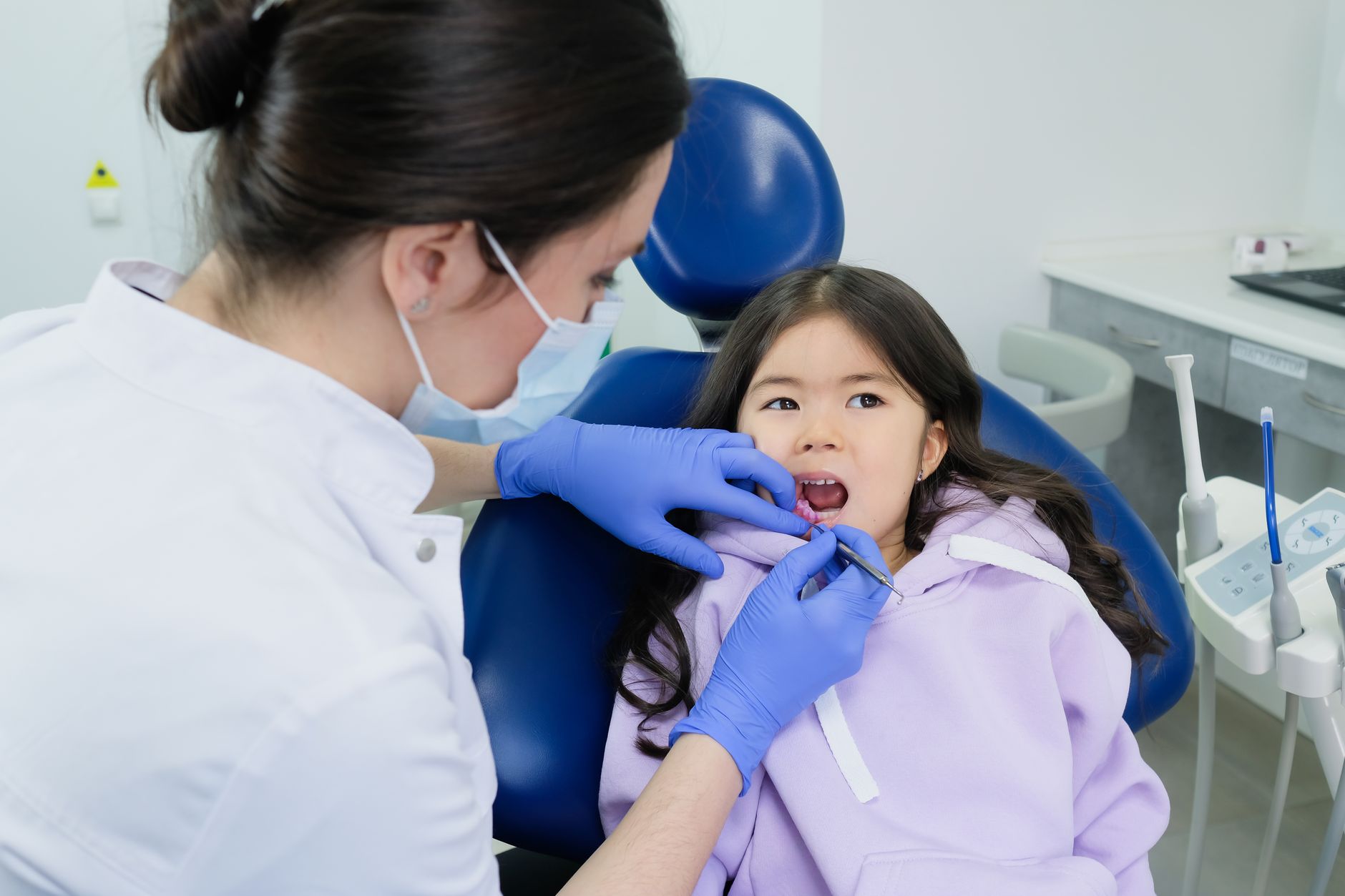
The American Association of Orthodontists recommends children have their first orthodontic evaluation by age 7. Signs that warrant an earlier visit include crowded baby teeth, crossbite, mouth breathing, thumb sucking past age 4, difficulty chewing, early or late tooth loss, and jaw shifting when biting. Early intervention can prevent more complex treatment later.
Parents in West Covina and across the San Gabriel Valley often assume orthodontic care starts when the permanent teeth come in. That assumption can cost years of ideal treatment timing. The jaw is most moldable during early childhood. Waiting removes simpler options. It limits access to less invasive treatment than adolescent correction. At One Smile Orthodontics, we have observed that families who pursue early evaluation often complete treatment with fewer total appliances and shorter overall treatment duration than those who wait until the teenage years.
1. Crowded or Overlapping Baby Teeth
Baby teeth are not just placeholders. They are active predictors of permanent tooth eruption. Crowded primary teeth strongly forecast crowded adult teeth. If your child's baby teeth are visibly pushed together, rotated, or overlapping, that signals a problem. The jaw may not have enough arch width for the larger permanent teeth forming beneath the gum line. This is one of the clearest reasons to schedule an early orthodontic evaluation rather than waiting for the adult teeth to arrive.
Why crowded baby teeth are not something to 'wait and see'
The jaw is most responsive to gentle expansion during early childhood growth spurts. This typically occurs between ages 5 and 9. A palatal expander can widen the arch gradually during this window. It creates room before permanent teeth erupt. Waiting until all adult teeth are present often means choosing between more invasive treatment and extractions. Phase 1 orthodontics before age 10 frequently eliminates the extraction question entirely. A board-certified orthodontist can assess jaw width and arch development with one clinical exam and a panoramic X-ray. This gives your family a clear picture before problems compound. In our experience, early screening allows us to differentiate between findings that resolve naturally and those requiring intervention, so families avoid unnecessary treatment while protecting against preventable complications. Interceptive orthodontics at this stage is about guiding growth, not fixing damage after it has already occurred.
2. Your Child Breathes Through Their Mouth
Mouth breathing during sleep or even during quiet waking hours is one of the most overlooked early warning signs in pediatric orthodontics. Consider a 6-year-old in West Covina. His parents noticed he breathes through his mouth during the day and snores loudly at night. This affected his sleep quality and daytime focus at school. A panoramic X-ray at an early orthodontic evaluation revealed a narrow palate restricting nasal airflow, and Phase 1 treatment with a palatal expander began immediately, widening the upper jaw and improving his breathing within months. OSA (obstructive sleep apnea) is estimated to affect 2% to 5% of children (ncbi.nlm.nih.gov), and parent-reported sleep-disordered breathing (SDB) occurs in 4% to 11% of pediatric patients (ncbi.nlm.nih.gov). A narrow palate is one of the most common structural contributors. When the upper jaw is too narrow, nasal airflow is restricted, and the child defaults to breathing through the mouth. Airway orthodontics addresses this structural cause rather than treating symptoms in isolation.
How does mouth breathing affect jaw and facial development?
Chronic mouth breathing changes the posture of the tongue. Instead of resting against the palate and providing natural upward pressure that widens the arch, the tongue drops low in the mouth. Over months and years, this altered posture allows the palate to narrow. The upper jaw develops in a longer, narrower shape. Children who mouth-breathe consistently show measurably different facial profiles compared to nasal breathers, with longer lower face height and increased risk of posterior crossbite. Research from StatPearls documents that obstructive sleep apnea accounts for approximately 95% of diagnosed sleep apnea cases in children (ncbi.nlm.nih.gov), and the airway structural component is frequently addressable with palatal expansion. Orthodontic appliances like palatal expanders widen the arch, increase the nasal floor dimensions, and measurably improve nasal airflow in many patients. We recommend discussing airway-focused orthodontics with your child's dentist or orthodontist if mouth breathing is a persistent concern, as our team has found that addressing the structural component often yields improvements in both sleep quality and facial development. This is not fringe care. It is supported by a growing body of pediatric sleep and ENT research that links narrow palate morphology to sleep-disordered breathing outcomes. Early evaluation gives children the best window to benefit from skeletal correction while growth is still active.
3. Your Child Still Sucks Their Thumb or Finger After Age 4
Thumb sucking is normal and even soothing in infants and toddlers. The critical threshold is age 4. After that point, the habit applies consistent, directional pressure to the developing palate and front teeth at exactly the stage when the jaw is most moldable. A 2026 systematic review and meta-analysis (Faryad et al.) confirmed that both pacifier use and digit/thumb sucking significantly increase the risk of anterior open bite, though the magnitude of risk varies by habit type, duration, and frequency, and no single odds ratio applies uniformly to both habits (ncbi.nlm.nih.gov). Published prevalence data indicate that non-nutritive sucking habits are common among young children, and anterior open bite has been detected in a meaningful proportion of preschool-aged children studied.
The structural effect is specific. The thumb pushes the upper front teeth forward and the lower front teeth backward, creating an open bite where the upper and lower front teeth no longer meet when the mouth closes. This makes biting into firm foods difficult and can persist even after the habit stops, if the habit continued long enough. Habit appliances placed by an orthodontist remove the physical ability to suck the thumb comfortably, which helps break the behavior faster than willpower-based approaches alone. The earlier the habit stops, the greater the chance the teeth and palate self-correct naturally without further appliances. At One Smile Orthodontics, we counsel parents that habit appliances placed early are often removable and temporary, allowing children to break thumb sucking quickly so the natural growth process can work in their favor. After age 6 or 7, that window of self-correction narrows significantly.
4. Your Child Has a Crossbite
A crossbite is one of the conditions the AAO identifies as a clear indication for Phase 1 orthodontic treatment, and it should not be monitored passively while the child grows. In a crossbite, one or more upper teeth sit inside the lower teeth when the mouth closes, rather than outside them as they should. Early treatment matters here more than almost anywhere else in orthodontics.
What is the difference between a posterior and anterior crossbite?
A posterior crossbite involves the back teeth and typically signals a narrow upper jaw. The upper arch is not wide enough to span the lower arch correctly, causing the back teeth to bite inside the lower molars on one or both sides. A palatal expander corrects this effectively, and the results are most stable when treatment begins while the midpalatal suture is still open, generally before age 10 to 12. An anterior crossbite involves one or more upper front teeth that bite behind the lower front teeth, the opposite of the correct relationship. Both types cause the child to shift the jaw sideways or forward to find a comfortable bite, which is called a functional shift. Unaddressed functional shifts cause asymmetric bone growth. This becomes a skeletal problem requiring surgical correction in adulthood. Both types require evaluation before age 7 because jaw bones are still highly moldable and the correction is vastly simpler at this stage. Our team has found that posterior and anterior crossbites detected and treated before age 8 typically resolve with palatal expansion alone, whereas the same conditions identified in adolescence frequently require multiple appliances or surgical planning.
5. The Jaw Shifts or Makes Clicking Sounds When Biting
Watch your child close their teeth together slowly from an open mouth position. If their lower jaw slides to one side or forward before the teeth fully meet, that movement is called a functional shift. It means the teeth are deflecting the jaw out of its natural joint position to find a place to bite. This deflection places asymmetric loading on the jaw joints (TMJ) and on the growing condyles, which are the rounded ends of the lower jaw that sit in the joint socket. Over time, one condyle receives more compressive force than the other, which produces different amounts of growth on each side. Children who begin with a small functional shift at age 5 or 6 can develop measurably asymmetric jaw growth by age 12 or 13, at which point surgical correction may be the only option to achieve facial symmetry. Clicking or popping sounds in the jaw joint are a separate but related warning sign. While some jaw clicking in children resolves on its own, clicking paired with a visible jaw shift or bite discrepancy warrants prompt orthodontic evaluation. Catching a functional shift during Phase 1 orthodontics, when appliances can guide symmetric growth, is far less invasive than correcting structural asymmetry later. We recommend jaw shift evaluation as part of any early orthodontic screening, because our clinical experience shows that functional shifts caught at ages 6 or 7 respond reliably to interceptive treatment, whereas asymmetries allowed to develop for several years become far more complex.
6. Baby Teeth Are Lost Too Early or Too Late
Primary teeth fall out in a fairly predictable sequence between ages 5 and 12, and deviations from that timeline carry real orthodontic consequences. Losing a baby tooth before age 4 or 5, whether from trauma, decay, or other causes, removes the natural guide that helps the neighboring permanent teeth erupt in the correct position. Neighboring teeth drift into the gap over weeks and months, reducing the space the permanent tooth needs to erupt correctly. A space maintainer placed shortly after early tooth loss can preserve that arch space until the permanent tooth is ready.
Why does the timing of baby tooth loss matter for orthodontic development?
On the other end of the spectrum, a baby tooth that stays firmly in place well past its expected loss date can signal a problem underneath. The most common cause is an ectopic or impacted permanent tooth, one that is erupting at the wrong angle or is blocked by a physical obstruction. A panoramic X-ray taken during an early orthodontic evaluation reveals the position of every permanent tooth forming beneath the gums, including any that are impacted. Catching an impacted tooth before it has traveled far from its ideal position means orthodontic traction can guide it into place relatively easily. Discovering the same impaction at age 14 or 15, after years of abnormal eruption path, often requires surgical exposure followed by prolonged orthodontic correction. Timing is everything in interceptive orthodontics, and the evaluation itself takes less than an hour.
7. Your Child Has Difficulty Chewing or Biting Food
Difficulty biting into a sandwich, an apple, or other firm foods is not just a quirk. It is a functional signal. Children with a significant open bite cannot bring their upper and lower front teeth together to bite through food. Children with severe overjet, where the upper front teeth protrude far ahead of the lower teeth, face a similar limitation. Some children self-accommodate these bite problems so naturally that parents never notice, until they realize their child always tears food with their side teeth or avoids certain textures entirely. Speech is another functional marker worth noting here. Lisps, difficulty forming the "s" and "z" sounds, and other articulation issues are sometimes directly related to tooth position and jaw alignment. When the upper front teeth protrude or an open bite prevents normal tongue-tip contact with the teeth, speech development can be affected. An orthodontic evaluation can determine whether a bite issue is contributing to speech concerns, and early correction of the dental or skeletal cause sometimes improves articulation without speech therapy alone.
Skeletal bite problems, including open bite and significant overjet, are significantly easier to correct while jaw growth is still active. Waiting until the teen years converts what could have been a straightforward growth-guidance case into a fixed appliance case with limited skeletal influence. At One Smile Orthodontics in West Covina, Dr. Namgu Kim regularly sees children referred by local pediatric dentists and ENTs specifically because parents noticed chewing difficulty or speech concerns, and early evaluation consistently reveals actionable findings that benefit from timely intervention.
What Happens at an Early Orthodontic Evaluation?
The AAO recommends that all children receive an orthodontic screening by age 7, even without any visible symptoms. The evaluation itself is not a commitment to treatment. It is a diagnostic baseline. At most practices, including One Smile Orthodontics in West Covina, CA, the visit includes a clinical examination, digital X-rays, and photographs. Dr. Namgu Kim personally reviews every child's records rather than delegating to a treatment coordinator. The entire process typically takes under an hour, and the cost is often low or waived for an initial evaluation. Most children screened at age 7 leave with a monitoring schedule and no immediate treatment recommended. The value of that visit is knowing, not guessing.
Does early orthodontic treatment mean two rounds of braces?
This is the question West Covina families ask most often, and the honest answer is: not necessarily. Phase 1 orthodontics is targeted. It addresses a specific structural problem during a specific growth window. Crossbite correction with a palatal expander, habit appliance therapy for thumb sucking, and space maintenance after early tooth loss are all Phase 1 interventions that address a defined problem and then stop. Many children who complete Phase 1 treatment need a shorter, simpler Phase 2 (full braces or Invisalign for kids) than children who received no early intervention, because the jaw architecture is already correct. Some patients complete everything they need in Phase 1 and require only a retainer. Whether a child needs Phase 1, Phase 2, or both depends on individual findings, and a board-certified orthodontist can give you a clear, honest answer after a single evaluation. Medi-Cal orthodontics coverage in California uses a severity-of-need assessment (the HLD index, requiring a score of 26+ points or one of six automatic qualifying conditions) and generally requires patients to have lost all primary teeth or be at least 13 years old, meaning most Phase 1 (early interceptive) cases do not qualify under standard criteria, though narrow EPSDT exceptions may apply in documented medical necessity cases — so families across the West Covina service area should confirm individual eligibility when considering early evaluation.
Frequently Asked Questions
What age should a child first see an orthodontist?
Is Phase 1 orthodontic treatment covered by dental insurance or Medi-Cal?
How is airway orthodontics different from traditional braces for kids?
What happens if we wait until my child is a teenager to start orthodontic treatment?
How do I know if my child needs a palatal expander?
What are the benefits of early orthodontic evaluation for children?
How can I tell if my child's jaw is developing properly?
Are there any specific foods that can help identify orthodontic issues in children?
How does mouth breathing affect a child's dental alignment?
What are the signs that my child might need Phase I orthodontics?
Sources & References
- Nonnutritive Sucking Habits and Anterior Open Bite in Children - AAPD (opens in a new tab)[org]
- Non-Nutritive Sucking and Open Bite in Kids - EBSCO FullText via Scribd (opens in a new tab)[industry]
- How Pacifiers And Thumb Sucking Affect Your Child's Teeth In 2026 (opens in a new tab)[industry]
- Pediatric Obstructive Sleep Apnea - StatPearls - NCBI Bookshelf (opens in a new tab)[gov]
- What Are the Benefits of Early Orthodontic Treatment? | American Association of Orthodontists (opens in a new tab)[factcheck]
- Pediatric Obstructive Sleep Apnea - StatPearls - NCBI Bookshelf (opens in a new tab)[factcheck]
- The Role of Digit- and Pacifier-Sucking Habits on Malocclusion Development in Children: Anterior Open Bite and Posterior Crossbite—A Systematic Review & Meta-Analysis (Faryad et al., Dent J 2026) (opens in a new tab)[factcheck]
- Factors associated with the prevalence of anterior open bite among preschool children: A population-based study in Brazil – PMC / PubMed (opens in a new tab)[factcheck]
- Thumb Sucking and Other Nonnutritive Sucking Habits in Children – StatPearls, NCBI Bookshelf (opens in a new tab)[factcheck]
- Posterior crossbite - treatment and stability - PMC (PubMed Central) (opens in a new tab)[factcheck]
- Anatomy, Head and Neck, Primary Dentition – StatPearls, NCBI Bookshelf (opens in a new tab)[factcheck]
- EPSDT Services - Medi-Cal Dental (DHCS) (opens in a new tab)[factcheck]
About the Author
One Smile Orthodontics
One Smile Orthodontics is a West Covina practice led by Dr. Namgu Kim, offering board-certified expertise in braces, Invisalign, and airway orthodontics for all ages.
Learn more at www.onesmileorthodontics.com → (opens in a new tab)Related Posts

7 Foods You Cannot Eat With Braces (And What to Eat Instead)
Braces are a significant investment in your smile, and what you eat can make or break your progress. This guide covers the 7 most damaging foods to avoid during orthodontic treatment, explains exactly why they cause problems, and offers delicious safe alternatives so you never feel deprived.
14 min read
Lingual Braces vs. Invisalign: Which Is Better for Adults Who Want Hidden Treatment?
Both lingual braces and Invisalign offer nearly invisible orthodontic treatment for adults, but they work very differently and suit different cases. This comparison breaks down cost, comfort, effectiveness, and lifestyle fit so you can choose the right hidden treatment for your smile goals.
9 min read
How to Keep Teeth Clean With Braces: A Step-by-Step Brushing and Flossing Guide
Keeping teeth clean with braces requires more effort than regular brushing, but the right technique makes it manageable. This step-by-step guide covers brushing angles, flossing methods, and the tools that protect your smile while you straighten it.
13 min read